Showing posts with label Victorian England. Show all posts

Friday, January 27, 2023

The Invention of Murder


 The Invention of Murder: How the Victorians Revelled in Death & Detection & Created Modern Crime- Judith Flanders

Thomas Dunne

Released: September 1, 2011

Rating: πŸ“šπŸ“šπŸ“šπŸ“šπŸ“š

Synopsis: Murder in the 19th century was rare. But murder as sensation and entertainment became ubiquitous – transformed into novels, into broadsides and ballads, into theatre and melodrama and opera – even into puppet shows and performing dog-acts.

In this meticulously researched and compelling book, Judith Flanders – author of ‘The Victorian House’ – retells the gruesome stories of many different types of murder – both famous and obscure. From the crimes (and myths) of Sweeney Todd and Jack the Ripper, to the tragedies of the murdered Marr family in London’s East End, Burke and Hare and their bodysnatching business in Edinburgh, and Greenacre who transported his dismembered fiancΓ©e around town by omnibus.

With an irresistible cast of swindlers, forgers, and poisoners, the mad, the bad and the dangerous to know, ‘The Invention of Murder’ is both a gripping tale of crime and punishment, and history at its most readable.
__________________________________________________

Anyone interested in true crime, early crime, or how we as a people came to love watching crime drama on TV needs to read Judith Flanders' The Invention of Murder. 19th-century England saw the development of the police force as we know it (mostly) today, the beginning of the professional detective, the beginning of forensic science and crime analysis. In fiction, the detective story became a new genre, and took off in popularity- from Charles Dickens and Wilkie Collins to Arthur Conan Doyle. 

But these didn't develop in a vacuum- real life murders inspired many detective plots on page and stage, and science developed to keep up with the criminals. Judith Flanders explores many famous murder cases: from Burke and Hare to Constance Kent; the Marrs; Maria Marten; the Mannerings; poison panics; to, of course the most famous case of the century- Jack the Ripper. She doesn't just look at the cases themselves, but explores public reaction to them- what cases received the most news coverage? The most melodrama stage versions? Why puppet shows and wax images? How did the newspapers influence the Jack the Ripper case- possibly to the point where even today we can't tell fact from fiction? Flanders covers trials that make you want to lock up the judges and cases that make you glad you have nothing to do with 19th-century doctors.

People may have been committing murder since there were other people to kill, but it was the Victorians who made murder the entertainment industry we know it today. Judith Flanders' well written, well researched, and fascinating walk down the dark cobblestone lanes of London and the seemingly innocent village pathways will open your eyes to a whole new take on our modern views of crime and who you should really thank for the detective dramas on TV.

Saturday, November 10, 2018

Holiday by Gaslight


A Holiday By Gaslight: A Victorian Christmas Novella by [Matthews, Mimi]


A Holiday by Gaslight- Mimi Matthews
Perfectly Proper Press
Release Date: November 13, 2018

Rating:
πŸ“šπŸ“šπŸ“šπŸ“šπŸ“š

Synopsis: Sophie Appersett is quite willing to marry outside of her class to ensure the survival of her family. But the darkly handsome Mr. Edward Sharpe is no run-of-the-mill London merchant. He's grim and silent. A man of little emotion--or perhaps no emotion at all. After two months of courtship, she's ready to put an end to things.

But severing ties with her taciturn suitor isn't as straightforward as Sophie envisioned. Her parents are outraged. And then there's Charles Darwin, Prince Albert, and that dratted gaslight. What's a girl to do except invite Mr. Sharpe to Appersett House for Christmas and give him one last chance to win her? Only this time there'll be no false formality. This time they'll get to know each other for who they really are.
_____________________________________________________

Sophie Appersett is trying to be a modern woman.  The world is changing rapidly all around her and she is trying to take Mr. Darwin's theories to heart and change with them.  While her family has no money, she is a baronet's daughter and has been raised to expect a marriage of convenience instead of love. When the wealthy Edward Sharpe shows an interest in her, it doesn't bother Sophie that he isn't an aristocrat.  But after two months of courting, it does bother her that she still knows nothing about Ned.  He never says more than a few words and always seems to wish he was somewhere else.  While Sophie might not expect love, a vague liking would be nice! She's ready to call it off if they can't get to know each other during her family's Christmas house party.  What Sophie doesn't take into account is the gaslight . . .

 Sophie is a wonderful heroine: smart, independent, kind, and warm.  While on the surface she and Ned Sharpe seem to be complete opposites, once Ned realizes he needs to break down and be a little more himself around Sophie, it becomes obvious they are a perfect match.  She has shouldered the burdens of her family: her spoiled sister and her father's mania for modernization of the family home even when it means spending Sophie's dowry to make it happen.  The idea of having a partner in life, a man who will treat her as an equal, is more beguiling than any romance to her.  Ned doesn't believe in romance or love, but Sophie teaches him that both are exactly what he needs.  They just need a little plain speaking between them, and a little relationship advice from Charles Darwin.  

Blending the rapidly evolving scientific discoveries of the 1860s with changing societal ideas and prejudices makes for a fresh approach to the Victorian Christmas novella. Romance and high family drama allow Sophie and Ned to evolve naturally in front of us, often surprising themselves as much as us.  A sweet, delightful holiday novella, Gaslight brings all the charm and magic of a Victorian Christmas to life on each page. Fans of Lisa Kleypas' Wallflowers series will love Mimi Matthews' A Holiday by Gaslight!


I received an ARC of this book from NetGalley in exchange for an honest review

Saturday, November 3, 2018

Dangerous Duet


A Dangerous Duet: A Novel by [Odden, Karen]


A Dangerous Duet- Karen Odden
William Morrow/Harper Collins
Release Date: November 6, 2018

Rating:
πŸ“šπŸ“šπŸ“šπŸ“šπŸ“š

SynopsisNineteen-year-old Nell Hallam lives in a modest corner of Mayfair with her brother Matthew, an inspector at Scotland Yard. An exceptionally talented pianist, she aspires to attend the Royal Academy; but with tuition beyond their means, Nell sets out to earn the money herself—by playing piano in a popular Soho music hall. And the fact that she will have to disguise herself as a man and slip out at night to do it doesn’t deter her.


Spending evenings at the Octavian is like entering an alternate world, one of lively energy, fascinating performers, raucous patrons—and dark secrets. And when Nell stumbles upon the operations of an infamous crime ring working in the shadows of the music hall, she is drawn into a conspiracy that stretches the length of London. To further complicate matters, she has begun to fall for the hall owner's charismatic son, Jack, who has secrets of his own. 
The more Nell becomes a part of the Octavian’s world, the more she risks the relationships with the people she loves. And when another performer is left for dead in an alley as a warning, she realizes her future could be in jeopardy in more ways than one.
_________________________________________________________________


Nell Hallam, nineteen and desperate to be accepted to the Royal Academy to further her future as a pianist, doesn't let convention stop her from reaching her goals.  To earn the needed tuition she plays piano at the Octavian Music Hall- which requires her to pretend she's a man.  There she makes friends with an unusual assortment of people, including trapeze artist Marceline and handyman Jack- who just happens to be the owner's son.  After finding Marceline beaten in an alley one night, Nell realizes there is more going on at the Octavian than music and a good time.  Nell needs to help her Scotland Yard Inspector brother take down a vicious ring of thieves and murderers- including dirty cops and Jack's own father- while keeping her friends and their secrets safe.

Nell is a woman ahead of her time, willing to step beyond the boundaries of convention to reach her goals and protect the people she loves.  Mature and rational, she is also willing to listen to her heart when it comes to the people around her.  Through her eyes we see people not only as they present themselves to the world, but also the complicated, multiple layers beneath their masks. Primary and secondary characters alike unfold layer by layer, all complex people with hopes, dreams, fears, and motives beyond what is seen on the surface.

Odden's debut novel, A Lady in the Smoke, introduced readers to a wonderful new author who knows how to describe London and the surrounding areas as if it is one of the book's characters and that talent is even more in evidence here.  A Dangerous Duet vividly brings readers into the double life of Victorian  London: beautiful Mayfair homes and first rate museums alongside the dirty alleys and rickety buildings of Soho.  You smell the bread being sold, feel the cobblestones beneath your feet, and hear the busy traffic on the streets. You check your hands for splinters, feel the smoothness of piano keys, and feel your heart leap in your chest right along with Nell.

A fast-paced novel blending the perfect amount of suspense and mystery with a deft touch of romance and music, A Dangerous Duet is a perfect book for mystery lovers!     


Monday, April 16, 2018

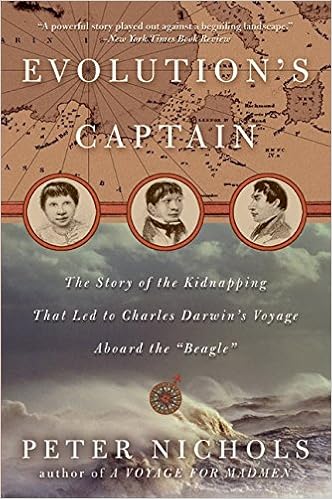
Evolution's Captain


Evolution's Captain: The Story of the Kidnapping That Led to Charles Darwin's Voyage Aboard the Beagle- Peter Nichols
HarperCollins
Release Date: June 29, 2004

Rating:
πŸ“šπŸ“šπŸ“šπŸ“š

Synopsis: One of the great ironies of history is that the famous journey—wherein Charles Darwin consolidated the earth-rattling ‘origin of the species’ discoveries—was conceived by another man: Robert FitzRoy. It was FitzRoy who chose Darwin for the journey—not because of Darwin’s scientific expertise, but because he seemed a suitable companion to help FitzRoy fight back the mental illness that had plagued his family for generations. Darwin did not give FitzRoy solace; indeed, the clash between the two men’s opposing views, together with the ramifications of Darwin’s revelations, provided FitzRoy with the final unendurable torment that forced him to end his own life.

________________________________________


Evolution's Captain is a fascinating book following Robert Fitzroy, captain of the HMS Beagle and brilliant surveyor.  The book chronicles Fitzroy's two trips on the Beagle and his adventures surveying South America and Tierra del Fuego for the British admiralty.  Along the way Fitzroy becomes fascinated by the native Fuegians and ends up kidnapping three of them and bringing them back to England. His intention is typical of a man of his time: to educate the Fuegians in British manners, 'civilize' them as proper Englishmen (and one woman), convert them to Christianity and then return them to Tierra del Fuego to spread English Christian Civilization through the islands.  

As much as a modern reader cringes at the concept and thoughts expressed in many of the journals and diaries left by Fitzroy, Darwin, and others of the time period, there is no escaping that for a large part of the 1800s this was how England viewed the world and tried to change it in its image.  The trick for any historian is to try and explain to modern readers the culture of the time period- religious, political, and social- that led to this attitude and life approach.  In this Nichols does an excellent job.  The cultural background he explains makes for fascinating reading and helps us gain something of the perspective that Fitzroy was using during his exploits.  While you don't agree with him, at least you come to understand where he was coming from.  

The great temptation for a book like this would be to have all of the first expedition and Fitzroy's life leading up to Darwin's arrival on the Beagle for the second voyage be merely setting the stage for Darwin and allowing him to take over the rest of the book.  I liked that Nichols resists that temptation and makes Darwin another way for us to follow and understand Fitzroy instead of becoming the centerpiece himself. Darwin is also a symbol (or a symptom) of Fitzroy's thinking later in life.  The Victorian era was one of the greatest and fastest changing eras in terms of social and scientific thought until the creation of the internet.  Babbage's analytic machine, the steam engine, developments in geology and biology brought huge changes with them.  Fitzroy, originally something of an amateur scientist himself, becomes one of the reactionaries who take up the religious mania of the times and attempts to use literal readings of the Bible to argue against growing ideas of evolution and scientific change. The great irony of his life becomes his friendship with Darwin and his decision to bring Darwin on the second expedition as a companion, only to be haunted in later life by Darwin's ideas and the feeling that he was personally to blame for their development.  While Nichols ably proves that this was not the case, it haunted Fitzroy for the rest of his life.

My only complaint is one I often have with histories or biographies- Nichols tends to allow foreshadowing to creep into his writing (especially at the end of chapters). The common "if only they knew", "this would change everything" type of remarks always annoy me, although Nichols does it less than some biographies I've read.

A fascinating book, and a must read for people interested in Victorian England and its cultural/scientific/religious developments , sea exploration and adventure , and South America.

Thursday, November 23, 2017

Curious Affair of the Witch of Wayside Cross


The Curious Affair of the Witch at Wayside Cross: (From the Casebooks of Jesperson & Lane) by [Tuttle, Lisa]


The Curious Affair of the Witch at Wayside Cross (from the casebook of Jesperson & Lane)- Lisa Tuttle
Hydra/ Random House
Release Date: November 28, 2017

Rating:
πŸ“š

Warning: Spoilers Ahead

Synopsis: “Witch!” cries the young man after stumbling unexpectedly into the London address of the consulting-detective partnership of Mr. Jasper Jesperson and Miss Lane. He makes the startling accusation while pointing toward Miss Lane . . . then he drops dead. Thus begins the strangest case yet to land—quite literally—on the doorstep of Jesperson and Lane.

According to the coroner, Charles Manning died of a heart attack—despite being in perfect health. Could he have been struck down by a witch’s spell? The late Mr. Manning’s address book leads Jesperson and Lane to the shrieking pits of Aylmerton, an ancient archaeological site reputed to be haunted by a vengeful ghost. There they sift through the local characters, each more suspicious than the last: Manning’s associate, Felix Ott, an English folklore enthusiast; Reverend Ringer, a fierce opponent of superstition; and the Bulstrode sisters, a trio of beauties with a reputation for witchcraft.

But when an innocent child goes missing, suddenly Jesperson and Lane aren’t merely trying to solve one murder—they’re racing to prevent another.

___________________________________


When a man falls dead at their front door, private detectives Jesperson and Lane decide to discover why he died and what brought him to their door in the first place.  The coroner says it was a heart attack but Charles Manning apparently had a great deal of interest in witches- could he have angered one into killing him?  The detectives travel to the countryside of Aylmerton where superstition and folklore live side by side with more 'modern' thinking and religion, where Manning was rumored to be courting a young witch, and where people are highly suspicious of outsiders.  Soon one questionable death turns into several and Jesperson and Lane have their hands full trying to prevent another.

Advertised as a paranormal Sherlock Holmes story, the Curious Affair promised to be full of mystery,  magic, and brilliant detectives.  I found it to contain very little of any of those.  Throughout the book you find yourself wondering if the magic and paranormal advertised are actually believed in and real, like Susanna Clarke's Jonathan Strange and Mr. Norrell, or a mere ruse with a devious but perfectly scientific explanation, like Doyle's The Hound of the Baskervilles. Even a confirmed fairy siting doesn't really answer the question as far as the rest of the characters go.  Does Manning's friend Felix Ott genuinely believe in returning the Old Religions and gods to England or is it a way to trick money from others?  Did he kill Manning over a business disagreement? 

The mystery itself was never more than mildly interesting to me, which was surprising.  You'd think a man dropping dead of unknown causes would lead to a pretty good whodunit.  But so many other things began to get piled on to the plot that sometimes you forgot about Manning altogether.  Yet none of the other mysteries- several other unexplained deaths and then the disappearance of an infant- really kept the plot moving for me either.  The book mostly revolved around a series of unlikeable characters who went from country hospitality to chilly and insulted in an instant.  Diana Bulstrode (the supposed witch of Wayside Cross) was the only character I found at all interesting and even she had a tendency to become annoying quickly.  The main characters of Jasper Jesperson and Miss Lane never gained any depth or particular background to make them interesting, unique, or likable. Even Miss Lane, who gives a Watson-like first person account of the case, isn't much more than a cipher to tell the story.  We get a brief and politely social background to her life before becoming a detective and more than halfway through the book are finally told her first name (although after finding out what it is you understand why she doesn't advertise it).  But the reader gets no real backstory to them: no explanation of how Miss Lane met Jespserson, why they decided to become detectives, what their relationship is, or anything else about them.  Maybe some of this was mentioned in Tuttle's first book (The Curious Affair of the Somnabulist and the Psychic Thief) but I haven't read that book.  Nor, after the Witch of Wayside Cross, do I really care to.  While things get interesting at the very end, by the time everything is revealed I was left with the feeling that all the murder victims got what they deserved and only vaguely sympathetic of the lives ruined in the process.

Tuttle does a good job describing the English countryside, but neither the characters nor the mysteries stood out to me as a way to make the book enjoyable.  Doyle enthusiasts and paranormal mystery lovers alike should probably skip this addition to the inspired-by-Sherlock shelves.  Weak and unlikeable characters overshadow what could have been an interesting set of mysteries to leave a book that sounded better in the description than in the reading.

I received an ARC of this book from NetGallery in exchange for an honest review

Thursday, December 29, 2016

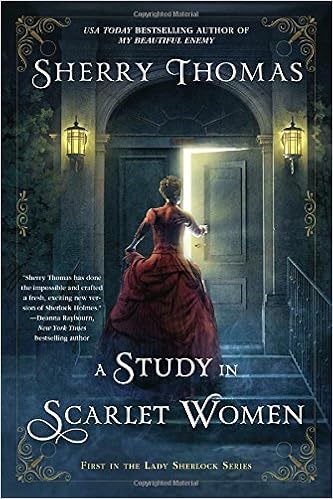
Study in Scarlet Women


A Study in Scarlet Women- Sherry Thomas
Berkley
Release Date: October 18, 2016

Rating (out of 5):
πŸ“šπŸ“šπŸ“šπŸ“š

Synopsis: With her inquisitive mind, Charlotte Holmes has never felt comfortable with the demureness expected of the fairer sex in upper class society. But even she never thought that she would become a social pariah, an outcast fending for herself on the mean streets of London. 
 
When the city is struck by a trio of unexpected deaths and suspicion falls on her sister and her father, Charlotte is desperate to find the true culprits and clear the family name. She’ll have help from friends new and old—a kind-hearted widow, a police inspector, and a man who has long loved her.

But in the end, it will be up to Charlotte, under the assumed name Sherlock Holmes, to challenge society’s expectations and match wits against an unseen mastermind.

_____________________________

Just when you think there can be no possible new take on Sherlock Holmes, along comes Sherry Thomas with her Lady Sherlock series to prove you wrong.  The first in a promised series, A Study in Scarlet Women follows Charlotte Holmes, youngest daughter of a Society family and a young woman who doesn't fit in society or the confined role for women of the day.  When her dream of becoming headmistress to a school (and therefore relatively independent) falls apart, Charlotte takes steps to ensure she isn't "marriage material".  The ensuing scandal ends with Charlotte running away from home to try to make her own way in a world that doesn't make it easy.  She proves to be stronger and more resourceful in the face of adversity than she (or anyone else) expected, and a twist of seemingly good fate lands her the position as companion to Mrs. Watson.  Not entirely conventional herself, Mrs. Watson sees Charlotte's ability to notice details and deduce facts not as something to be stifled, but as a way for Charlotte to become fully herself.  On discovering that Charlotte has created the identity of "Sherlock" Holmes to help a police inspector through occasional correspondence, Mrs Watson encourages "Sherlock" to set up as a private detective.

"Sherlock" makes his name by declaring that the seemingly natural and unrelated deaths of Lady Amelia, Lady Shrewsbury, and Mr. Sackville are, in fact, premeditated murder.  Both Charlotte's father and older sister Livia are under suspicion and it's up to Charlotte, Mrs Watson, police inspector Treadles and Lord Ingram (with help from his shadowy and mysterious older brother Bancroft) to solve the murders.

Study does an excellent job of weaving together nods to the traditional Sherlock Holmes stories with wholly original, fresh characters and mystery.  Thomas doesn't hide any of the facts from readers but allows them to work alongside the characters to try and piece together motives, red herrings, and relevant facts.  The writing is lovely: descriptive and absorbing.  Characters are intricate and also often more likable than the originals.  Charlotte may be socially awkward but is not the abrupt, aloof, and (let's face it) obnoxious Sherlock that we are used to.  Mrs Watson is open, friendly, colorful, and supportive.  In many ways she becomes the mother figure Charlotte always needed: encouraging Charlotte's interests  and abilities, teaching her to learn to value herself as an individual, and understanding her need for independence.  The two are more kindred spirits than you would first assume.  Inspector Treadles is not relegated to playing second fiddle but is an active investigator.  Instead of relying on "Sherlock" for all the answers he is out talking to people, testing and experimenting to separate lies and truths, motives and simple jealousies.  The help he needs generally comes from not being connected to the world of Society that the victims moved in and not having knowledge of the scandals of their pasts.

The writing and mystery of Study is subtle and I think it will take several rereads to discover all the hidden gems within.  The growth of characters like Charlotte and Livia make me eager for the next book in the series to see how they continue to gain confidence and independence under difficult situations.  The intricacy of the mystery make me excited to see what Thomas has in store for Holmes' next big case.

Not only an excellent and unique take on Sherlock Holmes, but also just an all around great historical mystery!  Full of twists and surprises, A Study in Scarlet Women keeps you on your toes until the very end.  A must read for mystery lovers!


Monday, November 7, 2016

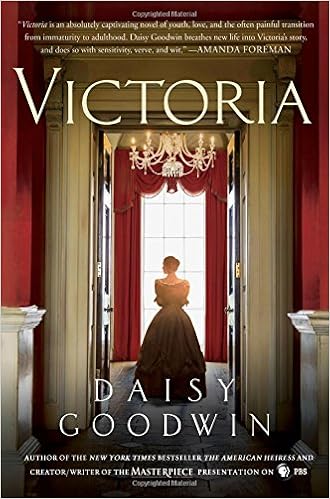
Victoria


Victoria- Daisy Goodwin
St. Martin's Press
Release Date: November 22, 2016

Rating (out of 5):
πŸ“šπŸ“šπŸ“šπŸ“šπŸ“š

Synopsis: Drawing on Queen Victoria’s diaries, which she first started reading when she was a student at Cambridge University, Daisy Goodwin―creator and writer of the new PBS/Masterpiece drama Victoria and author of the bestselling novels The American Heiress and The Fortune Hunter―brings the young nineteenth-century monarch, who would go on to reign for 63 years, richly to life in this magnificent novel.

Early one morning, less than a month after her eighteenth birthday, Alexandrina Victoria is roused from bed with the news that her uncle William IV has died and she is now Queen of England. The men who run the country have doubts about whether this sheltered young woman, who stands less than five feet tall, can rule the greatest nation in the world. 
Despite her age, however, the young queen is no puppet. She has very definite ideas about the kind of queen she wants to be, and the first thing is to choose her name.
“I do not like the name Alexandrina,” she proclaims. “From now on I wish to be known only by my second name, Victoria.”
Next, people say she must choose a husband. Everyone keeps telling her she’s destined to marry her first cousin, Prince Albert, but Victoria found him dull and priggish when they met three years ago. She is quite happy being queen with the help of her prime minister, Lord Melbourne, who may be old enough to be her father but is the first person to take her seriously.
_____________________

Victoria is a novel that draws you in from the very beginning and, on reaching the end, leaves you wanting more.  Most of the major characters, especially Victoria and Melbourne, are written as complicated and multi-faceted people, Victoria in particular. She lived all her young life with her smothering mother, the Duchess of Kent, and her mother's controlling "personal secretary" Sir John Conroy.  Kept from interacting with people her own age, and indeed people in general, kept from learning the details of government and protocol that she should have learned in detail, Victoria becomes both an adult and a monarch at the same time.  Probably because of this, she often seems to act out against those trying to guide her as queen, with sometimes very unhappy consequences.  It makes her often seem a spoiled and slightly unlikeable girl, but also highlights her very human struggles.

Challenged at every turn by the men who should be supporting her, she is suspicious of every attempt at guidance except that of Lord Melbourne.  Melbourne, the former husband to the infamous Caro Lamb, seems many similarities between his late wife and his new queen.  How much of Victoria's appeal to Melbourne is him trying to recapture his youth and bright view of the world?  I get the impression that, for this novel at least, even Melbourne didn't quite know the answer.  

The emotional bonds between Victoria and Melbourne show very much a young girl's first infatuation.  But Melbourne is also the only person Victoria believes sees her as an equal and not as a pawn to be controlled.  When Prince Albert comes onto the scene I was disappointed to not be able to see something similar.  Albert seems to disapprove of much of what Victoria enjoys most- from music and dancing to her dog Dash.  They are thrown together with the expectation of marrying by their family, but why does Victoria choose Albert in the end?  There seems to be some chemistry between them, but the respect and friendship she has with Melbourne never appear with Albert.  I don't know how much of this was based on fact and how much was dramatic license.  Did Victoria marry Albert because it was expected, because she couldn't have Melbourne, and grow to love him? Was it Goodwin's choice in order to keep the relationship between Victoria and Melbourne the center of the reader's focus, since it is certainly the center of the book?  I had hoped for a brief Author's note or Historical Note at the end that might have answered this question, or said anything about where Goodwin stayed strictly to the facts vs when she fictionalized aspects, but the advanced copy I read did not have one. I don't know if the final printing will, but if so it would be very interesting.  The book definitely made me want to read more on Victoria and some of the other players in her early reign.

Daisy Goodwin's Victoria is an enthralling, well-researched and well-written novel based on Queen Victoria's own diaries and brings new and dramatic life to a fascinating historical period.  It is a coming of age story as Victoria grows from the sheltered girl of Kensington Palace to Buckingham Palace's Queen of England.  Readers- whether already familiar with Victoria or not- will enjoy this fast-paced look at the life and times of one of the most famous women in history.  

I received an ARC of this book from NetGalley in exchange for an honest review.

Monday, March 28, 2016

A Lady in the Smoke- Karen Odden


A Lady in the Smoke-Karen Odden
Alibi- Random House
Release Date: March 29, 2016

Synopsis: Karen Odden’s enthralling debut historical mystery transports readers to Victorian England, where a terrifying railway disaster plunges a headstrong young noblewoman into a conspiracy that reaches to the highest corridors of power.  Following a humiliating fourth Season in London, Lady Elizabeth Fraser is on her way back to her ancestral country estate when her train careens off the rails and bursts into flames. Though she is injured, she manages to drag herself and her unconscious mother out of the wreckage, and amid the chaos that ensues, a brilliant young railway surgeon saves her mother’s life. Elizabeth feels an immediate connection with Paul Wilcox—though society would never deem a medical man eligible for the daughter of an earl.  After Paul reveals that the train wreck was no accident, and the inspector who tried to prevent it dies under mysterious circumstances, Elizabeth undertakes a dangerous investigation of her own that leads back to her family’s buried secrets. The more she learns, the more she must risk. Not only are her dowry and her reputation at stake; Paul’s very life hangs in the balance when he is arrested for manslaughter. As the trial draws near, and Parliament prepares for a vote that will change the course of the nation, Elizabeth uncovers a conspiracy that has been years in the making. But time is running out for her to see justice done.

A Lady in the Smoke is one of those rare debut books that hits every right note.  Odden's writing is smooth and descriptive, bringing the reader into a world of smoke and light, people and machines in a perfect blend of mystery, romance, and family. Wonderful descriptions of daily life make the reader feel as if they are on the street, or in the train, with the characters.  A Lady in the Smoke brilliantly weaves together what start off seeming like very separate story threads.  Railway accidents, strange land acquisitions, the tragedies of friends, and family secrets come together in ways you wouldn't have expected. 

All of Odden's characters are fully formed, three dimensional people with layered emotions, motives, and relationships.  Elizabeth Fraser is a strong and determined woman, just beginning to discover how to take control of her own life in spite of her family and society.  She becomes drawn into the railway conspiracy because of her compassionate nature and sense of justice- although ironically the only argument that gains her entry into the case is a purely financial one.  Even relatively minor characters like Anne and Phillip Reynolds are alive with emotions that wring your heart as you follow their struggles between doing what is right and what is comfortable.   

Fans of C. S. Harris and Amanda Quick will applaud this talented new author as she joins the ranks of truly excellent historical mystery writers.  A Lady in the Smoke is an absolute must read, and hopefully only the first of many excellent books in debut author Karen Odden's future.


I received an ARC of this book from NetGalley for an honest review.