Showing posts with label Ancient Rome. Show all posts

Friday, July 3, 2026

Not Built in a Day


 Not Built in a Day: How Slavery Made the Roman Empire-Emma Southon

Simon & Schuster

Release Date: June 30, 2026

Rating: 📚📚📚📚

Synopsis: When Julius Caesar conquered Gaul he boasted that he killed a million Gauls and enslaved a million more. This is the truth about the Roman Rome could not function without slavery as it underpinned every single part of their economy. Without the millions of people snatched from their homes in the aftermath of war, kidnapped from the streets, sold into slavery as punishment, or born into it as “home bred slaves”, the Roman empire’s great aqueducts and temples could never have been built. There would be no coins or tiles to find in fields, no limitless manpower for the army and navy that conquered the Mediterranean, no marble palaces or underfloor heating, and certainly no life of unimaginable luxury for the one percent who didn’t even tie their own shoes. For the first time, Not Built in a Day tells their stories.


Not Built in a Day takes readers into the invisible spaces of the Roman empire, where the millions of enslaved lives perpetuated the excesses of the empire that owned them. From the fields of wheat required to give every Roman his daily bread, to the actors and gladiators who provided their circuses; from the guards who kept the streets of Rome safe and the mines which kept Rome a city of gold and marble, to the builders who placed every brick in the Colosseum. It traces how people entered, experienced, and left slavery, covering the little known story of slave revolts and the complex realities of enslaved people who themselves owned enslaved people. Not Built in a Dayalso explores the lives of those freed from slavery, finally able to choose their own destinies.
___________________________________________________________

I'm a huge fan of historian Emma Southon. She's on my short list of must-buy historians when she has a new book coming out. She questions sources, she gets into the cracks of what archaeology and literature and laws have left us and works out what life would have been like for those who have been left out of so many re-tellings of history with a big H: women (A Rome of One's Own), and in Not Build in a Day, the enslaved population of the Roman Empire. And she does it all with a delightful snarky, irreverent sense of humor. 

As horrifying as Roman slavery was, the layers of complexity thanks to frankly weird laws that meant the empire literally could not survive without a massive enslaved population were fascinting. I had no idea about some of the financial and legal hoops Romans built for themselves. While I knew this was a civilization that was focused on status, I'm not sure I had absorbed just what that meant about daily life: your status had status and could change depending on so many things. This included people in slavery. Enslaved people, freed people and citizens, all had so many levels of status depending on who was involved with what that it must have been exhausting. 

The book breaks down into where people are enslaved (the imperial house, the city, the country, etc.) and the kind of work they are required to do, because that has massive impacts on the experience of the individual.

I can't tell you how much I think this book is a must-read for anyone interested in Roman history. Read it along side all the other histories that look at the big pictures and the big names and forget to tell you about what a Roman's daily life was like. Because this, this was daily life in Rome. You were on one side of the whip or the other, but every single person experienced this in some form every day. 

Wonderfully researched, well written, another triumph for Emma Southon. I can't wait to see where she takes us next. 

Sunday, January 11, 2026

Carthage

 Carthage: A New History- Eve McDonald

W.W. Norton & Co.

Rating: 📚📚📚

Release Date: January 13, 2026

Synopsis: Carthage was a power that dominated the western Mediterranean for almost six centuries before its fall to Rome. The history of the realm and its Carthaginians was subsumed by their conquerors and, along the way, the story of the real Carthage was lost. An ancient North African kingdom, Carthage was the home of Hannibal and of Dido, of war elephants and enormous power and wealth, of great beauty and total destruction.

In this landmark new history, Eve MacDonald tells the essential story of the lost culture of Carthage and of its forgotten people, using brand new archaeological analysis to uncover the history behind the legend. A journey that takes us the Phoenician Levant of the early Iron Age to the Atlantic and all along the coast of Africa, Carthage puts the city and the story of North Africa once again at the centre of Mediterranean history. Reclaimed from the Romans, this is the Carthaginian version of the tale, revealing to us that, without Carthage, there would be no Rome.
_______________________________

(3.5 stars)

When history is written by the winners, it can mean the losers are all but erased- and that is what happened with Carthage. Anything anyone today knows about the city comes to us from Roman eyes. So this book, trying to find the Carthage that isn't told to us through Roman propaganda, is a fascinating and much needed book for the history shelves.

From the city's founding as a Phoenecian outpost to its destruction by Rome hundreds of years later, Eve McDonald takes readers through the development of a city, a people, and a mega-power whose existence rivaled (and threatened) Rome's desire to dominate the Mediterranean. She critically examines both ancient sources and modern archaeological discoveries to evaluate how different events, trade, sieges, and the wars with Rome would have effected the Carthaginians. I found her explaination of the changes in the power structures across the Mediterranean over time, and how Alexander the Great essentially changed the game for everyone, quite interesting.

The chapters on the Punic Wars were, for me, the clearest and best written. Maybe because there's the most evidence in the historical sources for her to work with. McDonald is never afraid to admit when there is simply not enough information for scholars to do more than some educated guesswork on something, which I admire. By the end of the book I was pretty solidly on Carthage's side and wishing more reasonable treatied could have worked- but apparently that's not what was going on in this time.

An excellent, well-written, well-researched book for anyone who is interested in getting the story Carthage wishes it could have told us. A must-read for ancient history enthusiasts.

I received an ARC of this book from NetGalley in exchange for an honest review


Monday, November 6, 2023

A Rome of One's Own


A Rome of One's Own: The Forgotten Women of the Romane Empire- Emma Southon 

Abrams Press

Release Date: November 7, 2023

Rating:📚📚📚📚📚

Synopsis: The history of Rome has long been narrow and one-sided, essentially a history of “The Doing of Important Things,” and as far as Roman historians have been concerned, women don’t make that history. From Romulus through “the political stab-fest of the late Republic,” and then on to all the emperors, Roman historians may deign to give you a wife or a mother to show how bad things become when women get out of control, but history is more than that.

 
Emma Southon’s A Rome of One’s Own is the best kind of correction. This is a retelling of the history of Rome with all the things Roman history writers relegate to the background, or designate as domestic, feminine, or worthless. This is a history of women who caused outrage, led armies in rebellion, wrote poetry; who lived independently or under the thumb of emperors. Told with humor and verve as well as a deep scholarly background, A Rome of One’s Own highlights women overlooked and misunderstood, and through them offers a fascinating and groundbreaking chronicle of the ancient world.

______________________________________________________________

Emma Southon is my absolute favorite historian when it comes to exploring ancient Rome. First off, she literally wrote a book on murder in Rome (A Fatal Thing Happened on the Way to the Forum) and I feel like that is a book everyone needs in their life.  I know I did. Secondly, she examines Roman history a)within its historical context b)looking at the historical sources in their context and c)with a dry wit and humor that makes me feel like I'm having a conversation with a friend about something that I would actually regularly talk to a friend about (because that's the kind of person I am). It's also the sort of humor that would make people not necessarily interested in ancient history really get into it. And have I mentioned that she doesn't look at what Traditional Historians usually look at: Important Battles In History? 

Instead, Emma Southon has been on the cutting edge of examining ancient Roman history from the point of view of women since her fabulous book on Agrippina came out in 2019 and she hasn't looked back since. In A Rome of One's Own she builds on Agrippina's success by exploring the lives of 21 Roman women who historians both past and present have relegated to footnotes (if they get mentioned at all) and reframe the story to remind us that really, it's the women who are incredibly important in the story of Rome. Even the Romans knew that, little though some of them liked to admit it. 

A Rome of One's Own spans the entire length and timeline of the Roman Empire, from the early women of Rome (Tarpeia and Hersilia- you probably never heard of them) to one of the most famous (Lucretia- Roman men loved to turn her into a literary trope and make it all about them). From Boudicca (you might have heard of her, here's as close to the real story as Southon can get) to Julia Felix (a Pompeii businesswoman you've never heard of, but she'll make you question what you think you know about Romane women) and into the strange world of Christian martyrdom (Perpetua, in her own words) and the end of the Roman Empire, when Christians ruled and everyone was still fighting (Galla Placidia). Some of these women ruled behind the scenes, or not so behind the scenes, some just wanted to run a business and stay away from the murder-happy aristocrats. But Southon gives us compelling arguments that their stories, and the thousands like them that are not told here, are more the "real" Roman Empire than all of the Important Things and Battles we read so much about. Here are the true people of Rome, the lives both small and large, overlooked and misunderstood, and completely fascinating to read.

Full of fascinating facts and delightful humor, A Rome of One's Own is one of those books everyone should read!


I received an ARC of this book in exchange for an honest review


Tuesday, March 15, 2022

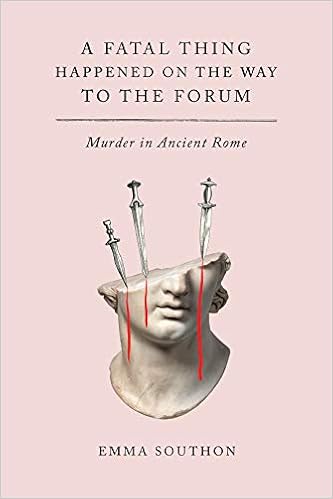
A Fatal Thing Happened on the Way to the Forum


A Fatal Thing Happened on the Way to the Forum: Murder in Ancient Rome- Emma Southon

Abrams Press

Release Date: March 9, 2021

Rating: ðŸ“šðŸ“šðŸ“šðŸ“šðŸ“š

Synopsis: In Ancient Rome, all the best stories have one thing in common—murder. Romulus killed Remus to found the city, Caesar was assassinated to save the Republic. Caligula was butchered in the theater, Claudius was poisoned at dinner, and Galba was beheaded in the Forum. In one 50-year period, 26 emperors were murdered.

But what did killing mean in a city where gladiators fought to the death to sate a crowd? In A Fatal Thing Happened on the Way to the Forum, Emma Southon examines a trove of real-life homicides from Roman history to explore Roman culture, including how perpetrator, victim, and the act itself were regarded by ordinary people. Inside Ancient Rome's darkly fascinating history, we see how the Romans viewed life, death, and what it means to be human.
________________________________________________________________


Anyone who wants to explore Roman history needs to be reading Emma Southon (Agrippina). She tells it like it is (in her view), gleefully abuses sources she finds unreliable but tells you why she finds them unreliable (where they writing 500 years after the events or just trying to make the emperor happy about what his grandfather did?), and analyzes where the truth behind the good stories probably lies. And the good stories in ancient Rome usually revolve around murder. So what does that tell us about the people in Rome?

First, remember that the people writing at the time were men, rich men, Roman men, and Citizens. When you remember that and what it meant at the time (Forum covers the Republic to the High Empire) you know that what these writers would have considered murder and what we in the twenty-first century Western world consider murder are actually very much not the same. Then add in that Romans didn't actually have a law against murder (as we today would consider it), that they expected any killings that were done in the home to be dealt with in the home and absolutely not to be the state's problem and you have a concept of how different things were. Then think about what you do know about ancient Rome (Gladiator anyone?) and how gladiator fights were their version of live streaming TV and in no way considered murder and where are you? 

A Fatal Thing Happened on the Way to the Forum covers everything from murdering your spouse and why this may or may not have been a problem (hint: if you were a woman this was terrible but if you were a man this was considered usually a good way of getting a richer wife- unless you were really stupid about it and your wife's family got Tiberius' attention, in which case you had a problem); murdering your parents/family (Romans really freaked out over that); murdering the enslaved (only worth talking about if it was a spectacle and technically not actually murder); to murdering emperors (how politics got done and kind of a Roman hobby). Southon takes a more Western twenty-first century approach to human beings and explores the lives of the enslaved and women as well as the upper 1% men, searching for the lives behind the stories, sympathizing with them and using this book to show the dark underbelly of the "classical" marble brilliance that is the Roman we all think we know.

Southon's well researched, well written, tongue in cheek, dry British humor should appeal to pretty much everyone. These are the stories we think we know, the ones we don't know, and the ones we can't wait to tell others. From knives to poison, swords to lampreys, this is a book that shows us that as different a world as we think ancient Roman and its people might have been, perhaps the people aren't so different from us after all.  Murder is still a truly universal fact of life.  


Tuesday, August 6, 2019

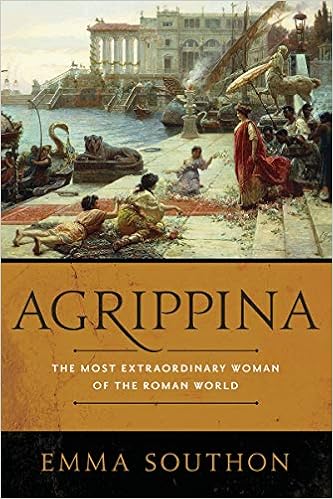
Agrippina


Agrippina: The Most Extraordinary Woman in the Roman World- Emma Southon
Pegasus Books
Release Date: August 6, 2019

Rating:
📚📚📚📚📚

Synopsis: Sister of Caligula. Wife of Claudius. Mother of Nero. The story of Agrippina, at the center of imperial power for three generations, is the story of the Julio-Claudia dynasty―and of Rome itself, at its bloody, extravagant, chaotic, ruthless, and political zenith.


In her own time, she was recognized as a woman of unparalleled power. Beautiful and intelligent, she was portrayed as alternately a ruthless murderer and helpless victim, the most loving mother and the most powerful woman of the Roman empire, using sex, motherhood, manipulation, and violence to get her way, and single-minded in her pursuit of power for herself and her son, Nero.
This book follows Agrippina as a daughter, born in Cologne, to the expected heir to Augustus’s throne; as a sister to Caligula who raped his sisters and showered them with honors until they attempted rebellion against him and were exiled; as a seductive niece and then wife to Claudius who gave her access to near unlimited power; and then as a mother to Nero―who adored her until he had  her assassinated.
Through senatorial political intrigue, assassination attempts, and exile to a small island, to the heights of imperial power, thrones, and golden cloaks and games and adoration, Agrippina scaled the absolute limits of female power in Rome. Her biography is also the story of the first Roman imperial family―the Julio-Claudians―and of the glory and corruption of the empire itself.
____________________________________________________________________________


Agrippina: The Most Extraordinary Woman in the Roman World gives readers something that is hard to find: a biography of a Roman woman.  Agrippina: sister of Caligula, wife of Claudius, mother of Nero.  She was loved and reviled, praised and curse- both today and during her lifetime. Agrippina created new roles for imperial women, and pushed (or outright broke) the accepted role of women in Roman life.

 Emma Southon looks at Agrippina's life as it can be pieced together from ancient sources, but she also gives readers perfect examples of why those sources can't necessarily be trusted.  She immerses the reader in the culture of the Roman world so we can see how our modern views on women, politics, and life in general were not those of Tacitus, Seutonius, and the histories they wrote.That True History can't always be discovered and sometimes the historian has to make their best assumptions- but should also be willing to admit that they are assumptions.

It is clear that Southon is an expert in all things Aggripina and ancient Rome and has done her research.  But her writing style isn't designed to overwhelm the reader with how much she knows or how amazingly academic she is.  Instead, Southon writes as if she is a friend trying to describe Agrippina's life to you over a pint at the local pub.  She is in full casual, brilliant,  story-telling mode; she shreds her original sources for their clear prejudices and unreliability; and presents it all with sparkling English humor, wit, and occasional vulgarity that left me laughing at many of her opinions and insights.  Southon reconstructs Agrippina's life through ancient sources, gives her views on what was mostly likely to happen when Agrippina wasn't being written about, and does a wonderful job of explaining why she thinks that way while reminding the reader when something is only herl speculation or opinion.     


If you only read one book in your life on Agrippina, or the Roman Empire as a whole, it needs to be Emma Southon's Agrippina: The Most Extraordinary Woman in the Roman World. It is a book for people who love history and are looking for a more feminist light to be shone on ancient sources, for those who love history and want to celebrate powerful women the Romans tried to hide in the shadows.  It is also a book for people who think they don't like history and that history is boring.  Just a few pages into Agrippina will convert even the most hardened "history isn't for me" believers. 


I received an ARC of this book from NetGalley in exchange for an honest review

Wednesday, March 6, 2019

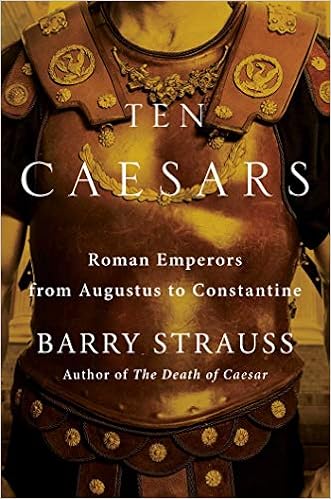
Ten Caesars


Ten Caesars: Roman Emperors from Augustus to Constantine- Barry Strauss
Simon & Schuster
Release Date: March 5, 2019

Rating:
📚📚📚📚

Synopsis: Barry Strauss’s Ten Caesars is the story of the Roman Empire from rise to reinvention, from Augustus, who founded the empire, to Constantine, who made it Christian and moved the capital east to Constantinople.

During these centuries Rome gained in splendor and territory, then lost both. The empire reached from modern-day Britain to Iraq, and gradually emperors came not from the old families of the first century but from men born in the provinces, some of whom had never even seen Rome. By the fourth century, the time of Constantine, the Roman Empire had changed so dramatically in geography, ethnicity, religion, and culture that it would have been virtually unrecognizable to Augustus.

In the imperial era Roman women—mothers, wives, mistresses—had substantial influence over the emperors, and Strauss also profiles the most important among them, from Livia, Augustus’s wife, to Helena, Constantine’s mother. But even women in the imperial family faced limits and the emperors often forced them to marry or divorce for purely political reasons.

Rome’s legacy remains today in so many ways, from language, law, and architecture to the seat of the Roman Catholic Church. Strauss examines this enduring heritage through the lives of the men who shaped it: Augustus, Tiberius, Nero, Vespasian, Trajan, Hadrian, Marcus Aurelius, Septimius Severus, Diocletian and Constantine. Over the ages, they learned to maintain the family business—the government of an empire—by adapting when necessary and always persevering no matter the cost. Ten Caesars is essential history as well as fascinating biography.
_________________________________________________________________

A concise, yet detailed, history of the Roman Empire and its emperors in one book seems like it would be impossible.  Yet in Ten Emperors: Roman Emperors from Augustus to Constantine Barry Strauss manages the feat.  Structuring his book around ten of the most influential of the Roman emperors (Augustus, Tiberius, Nero, Vespasian, Trajan, Hadrian, Marcus Aurelius, Septimius Severus, Diocletian, and Constantine) Strauss provides readers with a comprehensible, detailed view of the Roman Empire: its rise, its fall, and everything in between.

Each chapter provides a biography of an emperor, examines the larger world he grew up in, how he came to the throne, and the impacts he had on the empire- whether for better or worse.  Strauss also explores the sources this information comes from and reminds us that many of the more famous stories (like Nero fiddling while Rome burned) were written by people with their own agendas and not a recording of unbiased facts.  Whether today we can believe what is generally "known" about many of these figures is often up for debate and Strauss does not hesitate to say so.

Another excellent highlight of Ten Caesars is Strauss' crediting the powerful women involved in the empire.  Mothers, sisters, and wives of emperors get their due here as influential people- even if women technically played no part in Roman politics.  Strauss is upfront about the idea that Roman society itself often felt threatened by powerful women, and so stories of women poisoning their emperors husbands, fathers, brothers, etc abounded.  The reality probably involved far less poisoning.  Although since women around the emperors were used as pawns to strengthen dynastic alliances, and those alliances often involved the emperors than murdering the men their women married, one can see the temptation.

Although often repetitive, Ten Caesars is well-researched, well written, and maintains a steady pace.  Whether novice or expert on the Roman Empire and its emperors, any reader will enjoy Strauss' Ten Emperors and come away from it with a more detailed understanding of this fascinating and complicated period of history, and the men and women who influenced it.


I received an ARC of this book from NetGalley in exchange for an honest review


Friday, May 18, 2018

From Unseen Fire


From Unseen Fire (Aven Cycle) by [Morris, Cass]


From Unseen Fire- Cass Morris
DAW? Penguin Group
Release Date: April 17, 2018

Rating:
📚📚📚📚📚

Synopsis: The Dictator is dead; long live the Republic.

But whose Republic will it be? Senators, generals, and elemental mages vie for the power to shape the future of the city of Aven. Latona of the Vitelliae, a mage of Spirit and Fire, has suppressed her phenomenal talents for fear they would draw unwanted attention from unscrupulous men. Now that the Dictator who threatened her family is gone, she may have an opportunity to seize a greater destiny as a protector of the people—if only she can find the courage to try.

Her siblings—a widow who conceals a canny political mind in the guise of a frivolous socialite, a young prophetess learning to navigate a treacherous world, and a military tribune leading a dangerous expedition in the province of Iberia—will be her allies as she builds a place for herself in this new world, against the objections of their father, her husband, and the strictures of Aventan society.

Latona’s path intersects with that of Sempronius Tarren, an ambitious senator harboring a dangerous secret. Sacred law dictates that no mage may hold high office, but Sempronius, a Shadow mage who has kept his abilities a life-long secret, intends to do just that. As rebellion brews in the provinces, Sempronius must outwit the ruthless leader of the opposing Senate faction to claim the political and military power he needs to secure a glorious future for Aven and his own place in history.

As politics draw them together and romance blossoms between them, Latona and Sempronius will use wit, charm, and magic to shape Aven’s fate. But when their foes resort to brutal violence and foul sorcery, will their efforts be enough to save the Republic they love?

______________________________________________________


I can't lie, it was the cover that first caught my attention for this book.  It made me want to read the synopsis, which made me want to read the book- which led to one of the best fantasy books I've read in quite some time.  A book that lives up to its potential, From Unseen Fire takes place in an alternate, fantasy, version of ancient Rome.  The cruel dictator who governed the empire and terrorized its people is dead and now it is time to pick up the pieces- socially, politically, personally, and militarily.  

Latona of the Vitelliae is one of those who suffered under the dictator in order to protect her family.  Now freed from his shadow, she finds she cannot fit easily back into the life she led before.  No longer can she hide herself or her talents, or her wish to do more to rebuild the Republic and help its people.  All her life Latona has been held back by other people: her parents, who worried that unscrupulous men would use her and her magic; her husband who wants only a quiet life in the country focusing on his business; and Aventan society itself, which says that a woman who is not a priestess should focus her life and her magic only on her family.  Then she meets Sempronius Tarren, an ambitious man who hates to see talent wasted, and sees in Latona huge potential- if only she can find the courage to reach for it.  Sempronius is the first person to see Latona as she is, not as he wants her to be, so it can be no surprise that their friendship grows into a magnetically compelling attraction.

Sempronius is among those who want to rebuild Aven, and he joins the political clash on what the Republic should look like.  He hopes to break down barriers and allow people to thrive as their talents allow, without being trapped by class or citizenship restrictions.  Others want to return to the glory days of the old Aven, and the ways of the city's founders hundreds of years ago.  Some want to focus only on home while others worry about growing disturbances in the provinces.  Iberia becomes a hotbed of chaos with Aven's allies threatened by a new war-chief determined to protect his land and his people.  

At first glance, these seem like too many different story lines to work, but Morris weaves them together into a brilliant, seamless novel.  From Unseen Fire kept me on the edge of my seat the whole time, wondering what would happen next, if favorite characters would succeed in their personal quests. I was constantly worried that the book would end on a cliffhanger and I'd be left waiting desperately to find out what happened next.  True, the book doesn't wrap everything up in a neat bow- this is the start of a series.  But neither does Morris leave her readers yelling "How could you end it there!?" when they reach the last page.  I was struck throughout the entire book by how each of the characters believes completely that their actions are for the good of their land and their people.  Looking at it like that, none of them can be really considered 'villains', although some are more willing to take questionable paths to reach their idea of the greater good.

Although a debut novel, From Unseen Fire reads like it was written by a veteran author.  I greatly look forward to Cass Morris' next Aven book, both to keep following these characters and this world, and to see if Morris can keep to the high bar she set for herself here. 


I received an ARC of this book from NetGalley in exchange for an honest review