Showing posts with label Women in History. Show all posts

Tuesday, February 17, 2026

The Blood Countess


The Blood Countess:Murder, Betrayal, and the Making of a Monster- Shelley Puhak

Bloomsbury Publishing

Release Day: February 17, 2026

Rating: πŸ“šπŸ“šπŸ“šπŸ“š

Synopsis: There have long been whispers, coming from the castle; from the village square; from the dark woods. The great lady-a countess, from one of Europe's oldest families-is a vicious killer. Some even say she bathes in the blood of her victims. When the king's men force their way into her manor house, she has blood on her hands, caught in the act of murdering yet another of her maids. She is walled up in a tower and never seen again, except in the uppermost barred window, where she broods over the countryside, cursing all those who dared speak up against her.

Told and retold in many languages, the legend of the Blood Countess has consumed cultural imaginations around the world. But despite claims that Elizabeth Bathory tortured and killed as many as 650 girls, some have wondered if the Countess was herself a victim- of one of the most successful disinformation campaigns known to history. So, was Elizabeth Bathory a monster, a victim, or a bit of both? With the breathlessness of a whodunit, drawing upon new archival evidence and questioning old assumptions, Shelley Puhak traces the Countess's downfall, bringing to life an assertive woman leader in a world sliding into anti-scientific, reactionary darkness-a world where nothing is ever as it seems. In this exhilarating narrative, Puhak renders a vivid portrait of history's most dangerous woman and her tumultuous time, revealing just how far we will go to destroy a woman in power.
_____________________________________

If you go into Shelley Puhak's The Blood Countess expecting to read confirmation of the same horror stories you've heard before, imaging Elizabeth Bathory as a serial killer of innocent young women and bathing in their blood, you'll be disappointed. If, however, you want to read it for a fascinating exploration of a woman in power and how she was brought down by politics, religion, and the patriarchy—this is the book for you.

I knew nothing about Hungarian politics or how the Lutheran/Calvinist religious division manifested itself there or affected everyday people before reading this book. Puhak does a good job of breaking things down into understandable accounts, sticking to what we need to know because it's going to be important to Elizabeth's story. Puhak talks about working with translators and what previous translations of documents got wrong, which first led to accounts of cannibalism (for example) when that's not what was happening. 

The Bathorys were a powerful family in Hungary and Transylvania at a time when this was dangerous. Elizabeth was a strong woman who held a lot of land (both on her own and for her young son), she supported women healers during a time they were being pushed out by men. She made enemies by standing up for herself and other women, for insisting on justice during a time of corruption. She believed in the courts and the law, even when she saw it being made a mockery of by the Holy Roman Emperor, her supposed ruler and protector. When her neighbors came for her, she thought the laws would protect her. 

Instead, she became perhaps the greatest reminder of how much men fear women's minds, their leadership, their knowledge, and their strength, and how far men will go to erase women's power.

The Blood Countess is well researched, well written, full of fascinating information, and a great read for anyone interested in learning how politics, jealousy, and greed can create such an enduring and false legacy. 

I received an ARC of this book from NetGalley in exchange for an honest review 

Example of a Bookshop.org Buy Button


Tuesday, June 10, 2025

Penelope's Bones

Penelope's Bones: A New History of Homer's World Through the Women Written Out of It- Emily Hauser

University of Chicago Press

Release Date: June 13, 2025

Rating: πŸ“šπŸ“šπŸ“š

Synopsis: In Mythica Emily Hauser tells, for the first time, the extraordinary stories of the real women behind some of the western world’s greatest legends. Following in their footsteps, digging into the history behind Homer’s epic poems, piecing together evidence from the original texts, recent astonishing archaeological finds and the latest DNA studies, she reveals who these women – queens, mothers, warriors, slaves – were, how they lived, and how history has (or has not – until now) remembered them.

A riveting new history of the Bronze Age Aegean and a journey through Homer’s epics charted entirely by women – from Helen of Troy, Briseis, Cassandra and Aphrodite to Circe, Athena, Hera, Calypso and Penelope – Mythica is a ground-breaking reassessment of the reality behind the often-mythologized women of Greece’s greatest epics, and of the ancient world itself as we learn ever more about it.
___________________________________________________

I had very mixed feelings with this book. On the one hand, there was some very cool information on the latest archaeaolgical research and discoveries. New technology means DNA can tell us about travel in the Late Bronze Age, if families are buried together, or prove that more warrior gravesites are women warriors than were earlier believed. Texts unearthed through the Hittite Empire introduce powerful queens helping to rule the Hittite world next to Troy, and letters and tablets have been unearthed that suggest enough similarities between pieces of Homer's poems and real life to make Hauser's arguments plausible that the epics contain fragments of memories for ways of life that would have probably been old when the Iliad and the Odyssey were written down. I enjoyed most of the archaeological information, because I like reading about that kind of thing. 

Other parts of the book were, to me, more of a stretch. There was a lot of repetition. Hauser clearly didn't trust her audience to remember who any of the characters were, so would remind you every single time- especially the women already less well known like Briseis. Once or twice I can understand, but it was really annoying having her do it all the time. Each chapter would start with a short fictional story, which I know is the current fad, but personally I find throws me out of the nonfiction narrative and I always find off-putting. Some chapters were a stretch in terms of subject matter. In Circe's chapter, for example, I expected to learn about the ancient world's views on magic, or women living alone, or something else that might focus on women. Instead it is mostly about pigs. Yes, Circe and pigs go together and Hauser manages to connect them to religion and briefly to the mystery cults, but I was hoping for more. 

Frequently in the chapters Hauser brings up the modern retellings we see that are so popular today. Madeline Miller, Natalie Haynes, and some of her own books as well. These additions missed the mark for me. The readers of those books may be part of the audience she's trying to reach with this book, but adding the retellings here in the chapters themselves isn't part of the story of Homer's world. It would have worked better in the introduction or conclusion as part of the conversation on why women are now retelling the stories and focusing on reclaiming the lives and voices of the women in Homer's world.

I had high hopes going into Penelope's Bones, and while I would overall recommend reading it, I can't say I was as impressed with the book as I had hoped to be. Maybe I was expecting too much out if it. After all, Trying to uncover what has been pushed to the margins for thousands of years, both by the erosion of time, the men of the time period and by male archeologists until fairly recently, doesn't give you a lot to work with.

I received an ARC of this boon from NetGalley in exchange for an honest review


Tuesday, May 27, 2025

Sisterhood of Ravensbruck


The Sisterhood of Ravensbruck: How an Intrepid Band of Frenchwomen Resisted the Nazis in Hitler's All-Femal Concentration Camp- Lynne Olson

Random House

Release Date: June 3, 2025

Rating:πŸ“šπŸ“šπŸ“šπŸ“šπŸ“š

Synopsis: For decades after World War II, histories of the French Resistance were written almost exclusively by men and largely ignored the contributions of women. Many current overviews of the subject continue to underplay the extent and importance of women’s participation in the Resistance, treating the subject, in the words of one historian, as ‘an anonymous background element in an essentially male story’.

The Sisterhood of RavensbrΓΌck corrects that omission, surveying the bond between four women — Germaine Tillion, Anise Girard, Genevieve de Gaulle, and Jacqueline d’Alincourt — who fought valiantly against Nazi oppression. While the women belonged to different Resistance movements and networks, they were united by a common they were arrested by the Gestapo, underwent merciless interrogations and beatings, were jailed — and, most significantly, survived, if just barely, the hell of RavensbrΓΌck, the only concentration camp designed specifically for women. In an institution designed to dehumanise and kill, the sisterhood maintained their sense of self and joined together to face down death.
____________________________________________________________

Lynne Olson is one of my favorite historians, and has a wonderful talent for bringing out hidden voices and stories during World War 2 that help us discover so many new aspects to that time. Her last two books (Madame Fourcarde's Secret War and Empress of the Nile) explore the lives of two women who were trail-blazers both during and after the war, but who during the war helped build the French resistance against the Nazis. The Sisterhood of Ravensbruck follows the lives of four women: Germaine Tillion, Anise Girard, Genevieve de Gaulle, and Jacqueline d'Alincourt who were also part of the French Resistance- and who were sent to (and survived) Ravensbruck camp for that resistance.

The book is divided into three sections: before, during, and after Ravensbruck, and I was a little surprised at much of it focused on the after. As you'd expect with any book dealing with Nazis, concentration camps, etc. there are some parts that are hard to read. But the sisterhood that developed among the women in the camp, particularly the French women Olson focuses on, brought with it such surprising hope as well. They helped each other survive through so many acts that it brought tears to my eyes as I was reading. The Polish women (called "rabbits") who were used as medical experiments in the camp were helped by everyone, including being hidden when the order to kill them came at the end of the war (if you've read Martha Hall Kelly's Lilac Girls, it's based on the rabbit's story). The prisoners knew they all faced death for defying their captors, but they resisted the Nazis again. The strength of the women, sharing their tiny amounts of food, medicine, gathering evidence of the crimes against them in the hope that one day they would be free to use it, was staggering to me. As I read I could only wonder if I would have been that brave, and hope the answer would have been yes.

It should come as no surprise that none of the Ravensbruck women stopped being amazing after leaving the camp. They continued to stand together to ensure whoever needed medical help got it, to help each other reintergrate into post-War life. They stood as witnesses for the dead against the crimes the Ravensbruck Nazis had committed. They helped the "rabbits" get to America for medical tretment. And continued to stand up against injustices and crimes against humanity wherever they saw them for the rest of their lives. 

The inspiration brought to me by this story leaves me speechless. It is hard and uplifting, often at the same time– and absolutely a book we should all read and learn from. As we should learn from these women.

I received an ARC from NetGalley in exchange for an honest review


Saturday, September 7, 2024

The Northwomen


The Northwomen- Heather Pringle

National Geographic

Release Date: September 10, 2024

Rating: πŸ“šπŸ“šπŸ“šπŸ“š

Synopsis: Until Scandinavia converted to Christianity and came under the rule of powerful kings, the Vikings were a dominant force in the medieval world. Outfitted with wind-powered sailing ships, they left their mark, spreading terror across Europe, sacking cities, deposing kings, and ransacking entire economies. After the Vikings, the world was never the same.

But as much as we know about this celebrated culture, there is a large missing piece: its women. All but ignored by contemporary European writers, these shadowy figures were thought to have played little part in the famous feats of the Vikings, instead remaining at home as wives, mothers, and homemakers.

In this cutting-edge, revisionist portrait, renowned science journalist Heather Pringle turns those assumptions on their head, using the latest archaeological research and historical findings to reveal this group as they actually were. Members of a complex society rich in culture, courage, and a surprisingly modern gender ideology, the women of the Viking age were in fact forces to be reckoned with, serving as: Sorceresses, Warriors, Traders, Artisans, Explorers, Settlers, Landowners, Power brokers, Queens

Both ambitious and compelling, THE NORTHWOMEN is the true story of some of the most captivating figures of the Viking world—and what they reveal about the modern age.
______________________________________________________________

I'm always interested people who look at history and ask the question: where are the women? Obviously they were there, but women and their stories aren't recorded as often as men, and so are frequently overlooked and forgotten. 

In The Northwomen, journalist Heather Pringle searches for women in Viking world and talks to expert archaeologists who are looking at new (and old) evidence to rewrite what has been "established fact" for so long about the Viking world. 

Pringle does an amazing job here, helping to tell the stories that archaeologists are discovering in ways that laypeople can understand, bringing us into the world of explorers, traders, artisans, raiders, and sorceresses to think about how Viking women could have lived- and when (and if) they might have held power in that world.   

I loved how archaologically focused this book was, making the world very concrete and evidence based. One of my favorite chapters, surprisingly, was on weavers. Pringle interviewed people who have been studying and actually re-creating as much as possible the original Viking weaving methods, and used them to help make a woolen sail for a recreated Viking ship. The amount of work that went into the project and what they learned about the work the women would have done was amazing, and really captured me. There were even descriptions of woolen 'armor' that men would have worn when going into battle- in much of the world, not just among the Vikings! And all of it would have been created by women. 

Pringle doesn't try to completely rehabilitate the Vikings as a people, but recognizes the negative aspects of their society as well as the positive. She talks about them as a slave trading society (as were most societies of their day) and does a really interesting comparison to modern psychological studies in the slave trade to try to understand what it would have been like for women who were subjected to this. 

Overall, The Northwomen was a wonderfully written, well researched book that makes the latest archaeological research on women in the Viking world accessible to anyone who is interested in finding out about it. I definitely recommend this book!

I received an ARC of this book from NetGalley in exchange for an honest review


Wednesday, February 21, 2024

Shakespeare's Sisters


Shakespeare's Sisters: How Women Wrote the Renaissance- Ramie Targoff

Knopf

Release Date: March 12, 2024

Rating: πŸ“šπŸ“šπŸ“šπŸ“šπŸ“š

Synopsis: This remarkable work about women writers in the English Renaissance explodes our notion of the Shakespearean period by drawing us into the lives of four women who were committed to their craft long before there was any possibility of “a room of one’s own.”


In an innovative and engaging narrative of everyday life in Shakespeare’s England, Ramie Targoff carries us from the sumptuous coronation of Queen Elizabeth in the mid-sixteenth century into the private lives of four women writers working at a time when women were legally the property of men. Some readers may have heard of Mary Sidney, accomplished poet and sister of the famous Sir Philip Sidney, but few will have heard of Aemilia Lanyer, the first woman in the seventeenth century to publish a book of original poetry, which offered a feminist take on the crucifixion, or Elizabeth Cary, who published the first original play by a woman, about the plight of the Jewish princess Mariam. Then there was Anne Clifford, a lifelong diarist who fought for decades against a patriarchy that tried to rob her of her land in one of England’s most infamous inheritance battles. These women had husbands and children to care for and little support for their art, yet against all odds they defined themselves as writers, finding rooms of their own where doors had been shut for centuries. Targoff flings those doors open, revealing the treasures left by these extraordinary women; in the process, she helps us see the Renaissance in a fresh light, creating a richer understanding of history and offering a much-needed female perspective on life in Shakespeare’s day.
_____________________________________________________


If you're looking for an introduction to the world of Renaissance England through women's eyes and how they worked to make their voices heard through writing- look no further than Shakespeare's Sisters by Ramie Targoff. She takes the long-held belief that Tudor women didn't read, didn't write, and certainly weren't anything but meek and mild wives and daughters and throws it out the window. 

Queen Elizabeth might not have been trying to break the glass ceiling for women, but that doesn't mean other women weren't looking for ways to express themselves. Mary Sidney is someone readers might have heard of- at least because her brother was famous. She took that and ran with it, adding translations and poems of her own to published works of his (some that she only recently got credit for!). Aemilia Lanyer was the first woman to publish a book of original poetry in the 17th century, and she did it while worrying about money for her family because she wasn't nobly born! She made it more shocking by writing a feminist take on the crucifixion- including a poem from the point of view of the wife of Pontius Pilate arguing that if he condemned Christ he is basically erasing Eve's original sin and women are no longer the 'lesser sex'. Elizabeth Carey was the first woman to publish an original play, a feminist take on the Jewish princess Mariam. Anne Clifford is probably the first woman diarist who also wrote down her life and her family's history, all while fighting 40 years of legal battles for her inheritance.

Each of these women were ahead of their time in so many ways, determined to live life as they wanted to. This incredibly well-written and well-researched book gives them back their voices and introduces us to women we may not have known before, but will now definitely want to know more about. The book is designed to tell us more about their lives than to be literary analyses, but at the end we get a great chapter on why their writing is so rarely taught, where we can find their books, and other Renaissance women we might want to read. 

I absolutely recommend Shakespeare's Sisters to anyone interested in Tudor England and English literature, or the increasing discoveries of women's lives throughout history, some of which are only recently being brought back into the light.

I received an ARC of this book from NetGalley in exchange for an honest review

Monday, November 6, 2023

A Rome of One's Own


A Rome of One's Own: The Forgotten Women of the Romane Empire- Emma Southon 

Abrams Press

Release Date: November 7, 2023

Rating:πŸ“šπŸ“šπŸ“šπŸ“šπŸ“š

Synopsis: The history of Rome has long been narrow and one-sided, essentially a history of “The Doing of Important Things,” and as far as Roman historians have been concerned, women don’t make that history. From Romulus through “the political stab-fest of the late Republic,” and then on to all the emperors, Roman historians may deign to give you a wife or a mother to show how bad things become when women get out of control, but history is more than that.

 
Emma Southon’s A Rome of One’s Own is the best kind of correction. This is a retelling of the history of Rome with all the things Roman history writers relegate to the background, or designate as domestic, feminine, or worthless. This is a history of women who caused outrage, led armies in rebellion, wrote poetry; who lived independently or under the thumb of emperors. Told with humor and verve as well as a deep scholarly background, A Rome of One’s Own highlights women overlooked and misunderstood, and through them offers a fascinating and groundbreaking chronicle of the ancient world.

______________________________________________________________

Emma Southon is my absolute favorite historian when it comes to exploring ancient Rome. First off, she literally wrote a book on murder in Rome (A Fatal Thing Happened on the Way to the Forum) and I feel like that is a book everyone needs in their life.  I know I did. Secondly, she examines Roman history a)within its historical context b)looking at the historical sources in their context and c)with a dry wit and humor that makes me feel like I'm having a conversation with a friend about something that I would actually regularly talk to a friend about (because that's the kind of person I am). It's also the sort of humor that would make people not necessarily interested in ancient history really get into it. And have I mentioned that she doesn't look at what Traditional Historians usually look at: Important Battles In History? 

Instead, Emma Southon has been on the cutting edge of examining ancient Roman history from the point of view of women since her fabulous book on Agrippina came out in 2019 and she hasn't looked back since. In A Rome of One's Own she builds on Agrippina's success by exploring the lives of 21 Roman women who historians both past and present have relegated to footnotes (if they get mentioned at all) and reframe the story to remind us that really, it's the women who are incredibly important in the story of Rome. Even the Romans knew that, little though some of them liked to admit it. 

A Rome of One's Own spans the entire length and timeline of the Roman Empire, from the early women of Rome (Tarpeia and Hersilia- you probably never heard of them) to one of the most famous (Lucretia- Roman men loved to turn her into a literary trope and make it all about them). From Boudicca (you might have heard of her, here's as close to the real story as Southon can get) to Julia Felix (a Pompeii businesswoman you've never heard of, but she'll make you question what you think you know about Romane women) and into the strange world of Christian martyrdom (Perpetua, in her own words) and the end of the Roman Empire, when Christians ruled and everyone was still fighting (Galla Placidia). Some of these women ruled behind the scenes, or not so behind the scenes, some just wanted to run a business and stay away from the murder-happy aristocrats. But Southon gives us compelling arguments that their stories, and the thousands like them that are not told here, are more the "real" Roman Empire than all of the Important Things and Battles we read so much about. Here are the true people of Rome, the lives both small and large, overlooked and misunderstood, and completely fascinating to read.

Full of fascinating facts and delightful humor, A Rome of One's Own is one of those books everyone should read!


I received an ARC of this book in exchange for an honest review


Friday, April 15, 2022

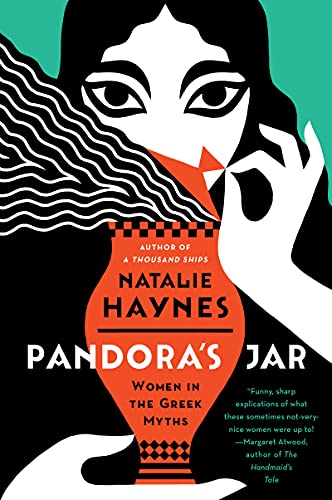
Pandora's Jar


Pandora's Jar: Women in the Greek Myths- Natalie Haynes

Harper Collins

Release Date: March 29, 2022

Rating: πŸ“šπŸ“šπŸ“šπŸ“š

Synopsis: The tellers of Greek myths—historically men—have routinely sidelined the female characters. When they do take a larger role, women are often portrayed as monstrous, vengeful or just plain evil—like Pandora, the woman of eternal scorn and damnation whose curiosity is tasked with causing all the world’s suffering and wickedness when she opened that forbidden box. But, as Natalie Haynes reveals, in ancient Greek myths there was no box. It was a jar . . . which is far more likely to tip over. 

In Pandora’s Jar, the broadcaster, writer, stand-up comedian, and passionate classicist turns the tables, putting the women of the Greek myths on an equal footing with the men. With wit, humor, and savvy, Haynes revolutionizes our understanding of epic poems, stories, and plays, resurrecting them from a woman’s perspective and tracing the origins of their mythic female characters. She looks at women such as Jocasta, Oedipus’ mother-turned-lover-and-wife (turned Freudian sticking point), at once the cleverest person in the story and yet often unnoticed. She considers Helen of Troy, whose marriage to Paris “caused” the Trojan war—a somewhat uneven response to her decision to leave her husband for another man. She demonstrates how the vilified Medea was like an ancient Beyonce—getting her revenge on the man who hurt and betrayed her, if by extreme measures. And she turns her eye to Medusa, the original monstered woman, whose stare turned men to stone, but who wasn’t always a monster, and had her hair turned to snakes as punishment for being raped.

Pandora’s Jar brings nuance and care to the millennia-old myths and legends and asks the question: Why are we so quick to villainize these women in the first place—and so eager to accept the stories we’ve been told?

_______________________________________________________________


In Pandora's Jar, author Natalie Haynes (A Thousand Ships) explores the different versions of some of the most well known of Greek women in mythology, and how those women have been changed throughout the generations, rarely for the better. Going back to the original Greek, to Homer, Ovid, and scaps of stories before them, Haynes looks at Medusa, Pandora, Helen, Jocasta, Penelope, Clytemnestra, Eurydice, Phaedra, Medea, and the Amazons. Who are these women, both in relation to their original stories, the stories we know best, plays or more modern movies, or perhaps even modern reincarnations or retellings? 


Some of my favorite chapters had to be the ones focused on Medusa, Medea, and the Amazons, although Penelope and Clytemnestra came close behind. With a sharp wit and occasional sarcasm to help keep her reader engaged, Haynes shreds whatever claims to the title hero men like Jason and Theseus have (and you really have to agree with her, especially about Theseus) to bring the story back around to the women. Medusa was hanging out in a cave not bothering anyone, having already suffered being sexually assaulted by Posiedon and cursed by Athene, she's sleeping and along comes this jerk with no personal grudge against her to chops off her head and weaponizes it. Every visual interpretation of this Haynes can find tends to make this moment both violent and sexual. What's that about, really?


Clytemnestra and Medea win Greece's awards for "worst wife" and "worst mother" because, Haynes points out, Greek men were terrified of powerful women. It kind of makes you want to travel back to when the plays were first performed and watch the male audience shake in their sandals- especially over Euripides' Medea. Or would they have been more afraid of Clytemnestra?  A woman with no magical power, no assistance from the gods, just ten years of rage over her husband sacrificing their daughter so he could go off to war and no one saying anything against it. He kills the kid, spends ten years at war making a name for himself and enjoying raping other women, then comes home (with his war "bride" in tow) and expects his wife to be happy about it? I'd have voted justifiable homicide if I was on that jury. 


There's something for everyone in these chapters- from original interpretations of Greek and how they can change meanings that stick with us down through the ages to the dangers of "sanitizing" myths to tell them to children. From descriptions of visual representations of myths in ancient pottery to what Medea's dragon chariot at the end of her play actually meant to the Greeks (which I thought was pretty great even if the male audience might not have); and modern operas of the story of Orpheus and Eurydice to modern Amazons together-we-are-powerful symbolism in Buffy the Vampire Slayer, the exploration into some of Greek mythology's well known (and a few lesser known) women should resonate with women across all levels. 


As Natalie Haynes says, we keep retelling these stories because we find new questions they raise and new voices wanting to be heard, and each generation will undoubtedly continue to do so. But discovering some of the origins makes those stories even more interesting to me.


Wednesday, August 26, 2020

Mad and Bad


Mad and Bad: Real Heroines of the Regency- Bea Koch
Grand Central Publishing
Release Date: September 1, 2020

Rating:
πŸ“šπŸ“šπŸ“šπŸ“š

Synopsis:  Regency England is a world immortalized by Jane Austen and Lord Byron in their beloved novels and poems. The popular image of the Regency continues to be mythologized by the hundreds of romance novels set in the period, which focus almost exclusively on wealthy, white, Christian members of the upper classes.

But there are hundreds of fascinating women who don't fit history books limited perception of what was historically accurate for early 19th century England. Women like Dido Elizabeth Belle, whose mother was a slave but was raised by her white father's family in England, Caroline Herschel, who acted as her brother's assistant as he hunted the heavens for comets, and ended up discovering eight on her own, Anne Lister, who lived on her own terms with her common-law wife at Shibden Hall, and Judith Montefiore, a Jewish woman who wrote the first English language Kosher cookbook.

As one of the owners of the successful romance-only bookstore The Ripped Bodice, Bea Koch has had a front row seat to controversies surrounding what is accepted as "historically accurate" for the wildly popular Regency period. Following in the popular footsteps of books like Ann Shen's Bad Girls Throughout History, Koch takes the Regency, one of the most loved and idealized historical time periods and a huge inspiration for American pop culture, and reveals the independent-minded, standard-breaking real historical women who lived life on their terms. She also examines broader questions of culture in chapters that focus on the LGBTQ and Jewish communities, the lives of women of color in the Regency, and women who broke barriers in fields like astronomy and paleontology. In Mad and Bad, we look beyond popular perception of the Regency into the even more vibrant, diverse, and fascinating historical truth.
______________________________________________________________________

When we think of the phrase "mad, bad, and dangerous to know" we think (of course) of Lord Byron and the men like him: dangerous rakes who could seduce a woman with a glance.  But in Mad and Bad: Real Heroines of the Regency, author Bea Koch turns this idea on its head by examining Regency England through the women who did't meet the stereotype of a demure Regency miss.  Koch refutes critics who bash Regency romances, claiming the historic time period is window dressing for stories with far too 'modern' heroines, by introducing us to real Regency heroines, from Lady Jersey and Caroline Lamb to DIdo Elizabeth Belle and Caroline Herschel.

Among the contradictory aspects of the Regency, sex and decorum are at the top of the list. So it is only natural that Koch starts Mad and Bad with some of the real "bad girls" of the era- women who pushed against Society's rules to be influential mistresses of royalty or highly placed politicians.  Any reader of Regency romance knows Almack's Assemblies and the strict and starchy Patronesses who ruled Polite Society.  But Koch gives us the behind-the-scenes stories of their affairs and intrigues that would shock any debutante.  How many Patronesses slept with the Prince Regent?  Or with each other's husbands? Who really ruled the ambassadorial home (and work) of Count and Princess Lieven?

Once she has hooked you with sex, Koch introduces us to women who might not be shocking by today's standards, but certainly didn't fit the stereotypical Regency mold.  Artists, authors, and actresses the reader may know by name are fleshed out into real people following their muse.  Female scientists, astronomers, and geologists struggle to be recognized in a man's world.  Today we think of movies or books that add LGBTQ and non-white characters as being "politically correct"- Koch introduces us to famous, infamous, and relatively unknown, but true life, LGBTQ and non-white people living in Regency England. Koch looks past the scandalous reputations women like Caroline Lamb have to try and find the real woman behind the myth, to put them in context of the times, and to show us the networks of women (and sometimes men) who supported them.    

The writing style of Mad and Bad is relaxed and informal, the people are introduced in relatively short pieces, as the book itself is not designed to be in-depth biographies.  Instead, it is an introduction to a world many readers might not have known even existed, and an introduction to the people who may become the forefront of history as we ask new questions about the "real" Regency England.  Koch provides the reader with plenty of 'recommended reading' and bibliographies to access more in-depth histories of any of the individuals who particularly grasp your attention, and I know my own "to read" list about doubled because of this!  My only complaint was the tendency towards repetition, a little more editing would have pushed this review from 4 to 5 stars easily.

An excellent introduction to a few of the strong women of Regency England who helped pave the way for women to this day.


I received an ARC of this book from NetGalley in exchange for an honest review

Monday, December 10, 2018

Bringing Down the Colonel


Bringing Down the Colonel: A Sex Scandal of the Gilded Age, and the "Powerless" Woman Who Took On Washington by [Miller, Patricia]


Bringing Down the Colonel: A Sex Scandal of the Gilded Age & the "Powerless" Woman Who Took on Washington- Patricia Miller
Sarah Crichton Books/Farrar, Strauss and Giroux
Release Date: November 13, 2018

Rating:
πŸ“šπŸ“šπŸ“šπŸ“šπŸ“š

Synopsis: In Bringing Down the Colonel, the journalist Patricia Miller tells the story of Madeline Pollard, an unlikely nineteenth-century women’s rights crusader. After an affair with a prominent politician left her “ruined,” Pollard brought the man—and the hypocrisy of America’s control of women’s sexuality—to trial. And, surprisingly, she won.


Pollard and the married Colonel Breckinridge began their decade-long affair when she was just a teenager. After the death of his wife, Breckinridge asked for Pollard’s hand—and then broke off the engagement to marry another woman. But Pollard struck back, suing Breckinridge for breach of promise in a shockingly public trial. With premarital sex considered irredeemably ruinous for a woman, Pollard was asserting the unthinkable: that the sexual morality of men and women should be judged equally.
Nearly 125 years after the Breckinridge-Pollard scandal, America is still obsessed with women’s sexual morality. And in the age of Donald Trump and Harvey Weinstein, we’ve witnessed fraught public reckonings with a type of sexual exploitation unnervingly similar to that experienced by Pollard. Using newspaper articles, personal journals, previously unpublished autobiographies, and letters, Bringing Down the Colonel tells the story of one of the earliest women to publicly fight back.
__________________________________________________________________


In the era of the Me Too movement, women are looking towards history and politics and wondering: are we the first to stand up?  We know women fought for the right to work, the right to vote, and we earnestly want to know not only what those women went through, but why.  Why did society and politics need the push they needed, and why did it succeed sometimes but not others?  What were all the unwritten currents for and against these pioneers?

Patricia Miller does an excellent job answering these questions in Bringing Down the Colonel: A Sex Scandal of the Gilded Age, and the "Powerless" Woman who Took on Washington.  Here she tells the story of Madeline Pollard and Colonel Breckinridge, and the unlikely lawsuit that helped turn of the century America question their double standard of men, women, and sexual morality.  Pollard was in a relationship with Breckinridge for at least ten years while he was married to another woman- and always claiming that were it possible, he would marry her.  But when his wife died, Breckinridge married another woman instead.  Madeline Pollard did what few women of the time were brave enough to do: she publicly admitted the relationship and her "ruin" and sued Breckinridge for breach of promise.  The resulting scandal not only forced society to ask questions it had never asked before, but brought down an elected official and brought thousands of Southern women into the political fray.

As fascinating as the story is by itself, Miller fills modern readers in on the backstory- the social norms of the time and those that were changing- to flesh out a complete world for her readers to understand.  Women were beginning to enter the workforce in increasingly large numbers.  Fathers and brothers were beginning to have to face the idea that a woman unchaperoned in public wasn't announcing her sexual availability, because their own wives, sisters, and daughters were now in those public spheres.  It was not 'just' the radical women who were asking for work equality and the right to vote, or to stand up to abuses happening around them. Miller explores the economic and educational environments that had begun to change, and does a solid job of helping the reader to understand why the mid-1890s was a time ripe for the changes Pollard and others pushed for. 

 Madeline Pollard forced the conversation of sex into public, into politics, and into the home.  She forced society to look at foundling orphanages, homes for fallen women, and the manipulations and social conventions that powerful men used to keep an entire class of women vulnerable to them.  She inspired the first movement of women who (though they couldn't vote) used their opinions and influence to ensure that a sexual predator was not reelected to a government position.  Pollard and the women who financed her battle took on Washington and inspired a generation of women to demand conversations and change in society and politics, morality and ethics.  The Pollard trial certainly didn't end the sexual double standard, but it did begin the conversation we still carry on today.

Although occasionally dry and repetitive, Bringing Down the Colonel is an inspiring, well-researched book, and gives readers an excellent understanding of how women have fought the 'battle of the sexes' - and gives an excellent historical reminder of how far we have come, and how equality is always relative. A must read!

Thursday, December 15, 2016

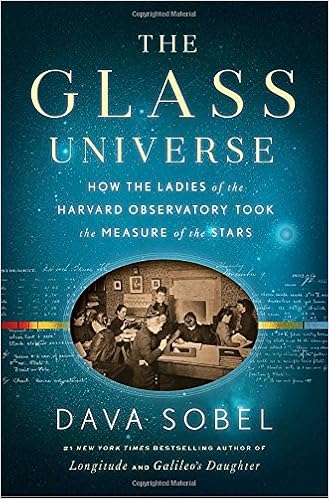
Glass Universe


The Glass Universe: How the Ladies of the Harvard Observatory Took the Measure of the Stars- Dava Sobel
Viking 
Release Date: December 6, 2016

Rating (out of 5):
πŸ“šπŸ“šπŸ“šπŸ“š

Synopsis: In the mid-nineteenth century, the Harvard College Observatory began employing women as calculators, or “human computers,” to interpret the observations their male counterparts made via telescope each night. At the outset this group included the wives, sisters, and daughters of the resident astronomers, but soon the female corps included graduates of the new women's colleges—Vassar, Wellesley, and Smith. As photography transformed the practice of astronomy, the ladies turned from computation to studying the stars captured nightly on glass photographic plates. 

The “glass universe” of half a million plates that Harvard amassed over the ensuing decades—through the generous support of Mrs. Anna Palmer Draper, the widow of a pioneer in stellar photography—enabled the women to make extraordinary discoveries that attracted worldwide acclaim. They helped discern what stars were made of, divided the stars into meaningful categories for further research, and found a way to measure distances across space by starlight. Their ranks included Williamina Fleming, a Scottish woman originally hired as a maid who went on to identify ten novae and more than three hundred variable stars; Annie Jump Cannon, who designed a stellar classification system that was adopted by astronomers the world over and is still in use; and Dr. Cecilia Helena Payne, who in 1956 became the first ever woman professor of astronomy at Harvard—and Harvard’s first female department chair. 

_________________________

The Glass Universe is a new look behind the scenes of some of the most influential, ground breaking discoveries of the Harvard College Observatory and the women who helped make them.  Beginning in the late nineteenth century, Harvard University began hiring women to assist with astronomical computing.  Thanks to Harvard's Professor Pickering and donors Mrs Anna Palmer Draper and Catherine Wolfe Bruce, women received job opportunities considered unusual at the time.  Astronomy enthusiasts and mathematicians, amateurs and college graduates, they were paid less than their male counterparts but generally treated as equals in the workplace- even publishing work under their own names before women in America had the right to vote.  

I have virtually no knowledge of astronomy, Harvard, or the history associated with either, but I found The Glass Universe to be both easily understandable and very interesting.  It is the story of the development of astronomy in the late nineteenth-early twentieth century as much as it is the women of Harvard.  The story of one cannot be told without the other, and without following the advancements in photography that made so many of the discoveries possible.  I loved learning about Harvard's "glass universe" of glass negatives- photographs taken by telescopes to track stars and their movement.  Before electronic computers there were "human computers"- in Harvard's case largely women- who measured distances and movements, light and speed, of various stars in what I would imagine were mind-boggling calculations.  Eventually they began using the plates for their own research and their work helped to define the universe as we know it today.

This is not a book filled with equations and charts.  It is the human story behind the science. The Glass Universe is a perfect example of how all history can be told through the stories of people and how these stories can make any subject both interesting and relatable.  It is also the story of how Harvard's glass universe helped (perhaps accidentally) break many of the glass ceilings faced by women at the turn of the century.  

I received an ARC of this book from NetGalley in exchange for an honest review.