Tuesday, February 28, 2023

Empress of the Nile


Empress of the Nile: The Daredevil Archaeologist Who Saved Egypt's Ancient Temples From Destruction- Lynne Olson

Random House

Release Date: February 28, 2023

Rating: ðŸ“šðŸ“šðŸ“šðŸ“šðŸ“š

Synopsis: In the 1960s, the world’s attention was focused on a nail-biting race against time: Fifty countries contributed nearly a billion dollars to save a dozen ancient Egyptian temples, built during the height of the pharaohs’ rule, from drowning in the floodwaters of the massive new Aswan High Dam. But the extensive press coverage at the time overlooked the gutsy French archaeologist who made it all happen. Without the intervention of Christiane Desroches-Noblecourt, the temples would now be at the bottom of a vast reservoir. It was an unimaginably large and complex project that required the fragile sandstone temples to be dismantled, stone by stone, and rebuilt on higher ground.

A willful real-life version of Indiana Jones, Desroches-Noblecourt refused to be cowed by anyone or anything. During World War II she joined the French Resistance and was held by the Nazis; in her fight to save the temples she challenged two of the postwar world’s most daunting leaders, Egypt’s President Nasser and France’s President de Gaulle. As she told a reporter, “You don’t get anywhere without a fight, you know.”

Yet Desroches-Noblecourt was not the only woman who played an essential role in the historic endeavor. The other was Jacqueline Kennedy, who persuaded her husband to call on Congress to help fund the rescue effort. After years of Western plunder of Egypt’s ancient monuments, Desroches-Noblecourt did the opposite. She helped preserve a crucial part of Egypt’s cultural heritage, and made sure it remained in its homeland.
_____________________________________________________________

Historian Lynne Olson, best known for her fantastic books on little known aspects of World War II history,  (Last Hope Island) gives us another little known but hugely influential story in Empress of the Nile. Along the lines of Madame Fourcade's Secret War, Empress of the Nile focuses on a Frenchwoman- Christine Desroches-Noblecourt, a resistance fighter during World War II. But what I thought would be the most interesting part of her story ended up being only a small part, and by no means the most fascinating.

Christiane Desroches-Noblecourt was fascinated by Egypt from a young age and was fortunate enough to have parents who supported her in following her dreams. She became the first female archaeologist and Egyptologist in France, facing incredible hostility from the men in her field, who didn't want her on dig sites. They disliked her presence in general, her talent and intelligence, her familiarity and positive working relationship with the local Egyptian workers, and her successes. When not on a dig in Egypt she was working at the Louvre. As the Nazi threat began to loom, the Louvre packed up its treasures and shipped them to different places for protection, with Christiane helping catalog, pack, and transport the Egyptian collections. She remained in Paris during the occupation and was part of the first resistance group against the Nazis, a fascinating collection of men and women who were mostly museum workers but were able to help hide escaping POWs in their museums and get them to safety, among many other things. When Christiane was arrested, questioned, and then released by Nazi officers she knew she would be under surveillance and backed away from the group to keep her friends in the movement safe. While I thought this early part of her life would have been the most fascinating, what really captivated me was what came after the war. Christiane worked with Egyptian officials, UNESCO, and other agencies during the 1960s to save Abu Simbel, the Temple at Philae, and other priceless monuments from being lost to flooding with the building of the new Aswan High Dam. She was the visionary and the driving force behind the effort, even though she received little credit then or now. It was Desroches-Noblecourt who brought experts and professionals from around the world together to work on a project with no political motivation, just pure desire to save archaeological treasures for the good of humankind.

Lynne Olson describes the race to save Abu Simbel, the Temple of Philae, and the other endangered monuments in breathtaking details that leave the reader's heart racing, desperate to find out what will happen next and how they will succeed. What will go wrong? How will they triumph? What political disasters will get in the way? The reader feels some of what Desroches-Noblecourt must have felt as she worked nonstop to save the temples. Along the way I learned a lot about the politics of Egypt, from when France and England took over during the 1800s through the 1960s and how the world's politics affected Egyptology. And how this can be overcome when a few voices prove what really matters.  

Empress of the Nile is a fascinating story of the little known life of Christiane Desroche-Noblecourt and her life long dedication to discovering, interpreting, and preserving Egypt's past. Carefully researched and beautifully written, this is the story of a strong and dedicated woman who inspired generations of archaeologists, and should inspire future generations of people to go for their dreams, no matter how impossible they seem. Because sometimes, you can move mountains.

I received an ARC of this book from NetGalley in exchange for an honest review


Sunday, February 19, 2023

Before Mrs. Beeton


Before Mrs. Beeton: Elizabeth Raffald, England's Most Influential Housekeeper- Neil Buttery

Pen & Sword Books

Release Date: February 28, 2023

Rating: ðŸ“šðŸ“šðŸ“šðŸ“šðŸ“š

Synopsis:  The great Elizabeth Raffald used to be a household name, and her list of accomplishments would make even the highest of achievers feel suddenly impotent. After becoming housekeeper at Arley Hall in Cheshire at age twenty-five, she married and moved to Manchester, transforming the Manchester food scene and business community, writing the first A to Z directory and creating the first domestic servants registry office, the first temping agency if you will. Not only that, she set up a cookery school and ran a high class tavern attracting both gentry and nobility. 

These achievements gave her notoriety and standing in Manchester, but it all pales in comparison to her biggest achievement; her cookery book The Experienced English Housekeeper. Published in 1769, it ran to over twenty editions and brought her fame and fortune.

But then disaster; her fortune lost, spent by her alcoholic husband. Bankrupted twice, she spent her final years in a pokey coffeehouse in a seedy part of town.

Her book, however, lived on. Influential and often imitated (but never bettered), it became the must-have volume for any kitchen, and it helped form our notion of traditional British food as we think of it today.

To tell Elizabeth’s tumultuous rise and fall story, historian Neil Buttery doesn’t just delve into the history of food in the eighteenth century, he has to look at trade and empire, domestic service, the agricultural revolution, women’s rights, publishing and copyright law, gentlemen’s clubs and societies, the horse races, the defeminization of midwifery, and the paranormal, to name but a few.
___________________________________________________________

Before Mrs. Beeton, there was Elizabeth Raffald, a one woman powerhouse who worked hard to become an incredible success, and deserves to be far more well known than she is today. Elizabeth began as a servant, worked her way up to (a surprisingly young) housekeeper, and after marrying John Raffald moved to Manchester where she had a confectioner's shop, catered fine meals, built a servant's hiring agency, wrote a best-selling cookery book based on the idea that the developing middle-class and servants (housekeepers etc.) wanted to know the best ways to economically cook excellent meals, plain meals, fancy desserts, and everything in between. 

This book does a really great job of giving the reader a good feel for where Elizabeth is historically and socially- she works to build up her social status and wealth without ever shocking the society around her. She plays by the rules, but she has a brilliant sense for business opportunities and timing that allow her to become an incredibly influential woman in Manchester, and author Neil Buttery argues, brings Manchester up with her. There is excellent additional research on life in eighteenth century England at different levels of society, the changes England's global empire were making back home, wonderful information on what it was like being a servant in these changing times when so many were leaving the country for city life, fascinating food history, and more. We get to see some of Elizabeth's recipes with modern adjustments in case anyone is adventurous enough to try them at home, and more.

As people once again become interested in food history and the people connected to making important contributions to national food as we might still know it today, Elizabeth Raffald will surely become a more known and celebrated name. This well-written and well-researched book will hopefully help to play a part in getting the word out. I'm certainly glad I found it!!

I received an ARC of this book from NetGalley in exchange for an honest review

Thursday, February 2, 2023

The Bloodstained Shade


The Bloodstained Shade (Aven Cycle #3)- Cass Morris

Published by Cass Morris

Release Date: January 31, 2023

Warning: Some Spoilers Ahead!

Rating: ðŸ“šðŸ“šðŸ“šðŸ“šðŸ“š

Synopsis: Latona of the Vitelliae, mage of Spirit and Fire, lies still as death. Her fate rests in the hands of her allies, who must redeem her soul from the churning void where Corinna, leader of a banished Discordian cult, has trapped it.

Protected by a cabal of corrupt priests and politicians, Corinna plans her most daring assault yet: a ritual striking at the ancient heart of Aven, with the power to swallow the city in a maw of chaos and strife. Her success would be Aven's doom, and the greatest violence would fall upon the most vulnerable.

Before Sempronius Tarren can join Aven's defense—and his beloved Latona—at home, he must end the war abroad, outwitting the blood-soaked machinations of his Iberian opponents. His own magical talents remain hidden, but dire circumstances tempt him to succumb to ambition and use forbidden tactics to hasten the way to victory.
To defeat Corinna, Aven's devoted protectors will need to perform extraordinary magic, rally support from unexpected quarters, and face the shadows on their own souls.

_______________________________________________________________

In The Bloodstained Shade, Cass Morris saves her devoted fans (and main character Latona) from the cliffhanger ending she left us with in Give Way To Night. But she doesn't make anything easy on her characters, clearly being an author who believes that roasting characters in a fire brings out their strongest qualities. Latona and Vibia remain the two main Aven-centered characters, although I was glad to see sisters Aula and Alhena getting more of a role here as well. Both sisters continue to develop as strong secondary characters, willing to face their fears despite the risks, and I'm hoping for even more from them in the next book, particularly from Alhena and her magic. 

We get to see Sempronius, Latona's brother Vitellius, and their allies finish the war in Iberia, and I liked how Morris wrapped that up. enemies became allies, but even among the enemies and the terrible things they were doing, there was a deep humanity to every action. Morris examines how different people handle the gruesomeness of war- this kind of war in particular- in different ways, and can come back sometimes changed for the better, or at least come back thinking differently. Sempronius gets a few shocks along the way and didn't really know what to do with them, or his emotions, or the idea of possibly being vulnerable in any way. I have to admit I rather enjoyed that- suddenly he became a very human character, realizing the mistakes he was making and what he was risking in a way that his confidence had never allowed him to do before. I also have to admit, I'm pretty worried for what Morris is setting him up for in the next book, with a few of the not-very-subtle clues she dropped in this one.  

One of the messages I loved in this book was the idea that we are who we make ourselves. Corinna may get to say it best when she chides Latona for trying to tell Corinna's story. "Never try to reduce another woman down to something smaller than she is" Corinna tells Latona. Corinna has refused to allow that to happen to her from the beginning. But it's a fight Latona's had across the whole series, being made smaller than she is and gradually growing out of that- although it is something she still fights with here. One of the reasons enemies fear Latona (and Sempronius) is for trying to step out of their normal roles in society and reach for something bigger. Throughout the book, and the series, is always the question, will we give in to temptation? Will we blame someone else for out actions? Or will we, in the end, accept that we are both the good and the bad of ourselves, and that can make us weak, or incredibly, unbelievably, strong and united.

Full of fast-paced scenes, and excellent writing, with vastly different characters and places woven together into a brilliant and heart-pounding finale. Secondary characters continue to shine and develop, our main characters continue to show strengths and flaws enough to keep them both likable and relatable. Cass Morris' Aven continues to shine as an ancient Rome-inspired world built into something new and different, and I can't wait for the next book in this incredible series.  


Bloodstained Shade starts with a very good "previously in Aven" summary for readers who didn't reread the first two books before starting Book 3, but I wouldn't recommend starting Shade without having read  From Unseen Fire and Give Way to Night first. This is a series that build from one book to the next. 


Friday, January 27, 2023

The Invention of Murder


 The Invention of Murder: How the Victorians Revelled in Death & Detection & Created Modern Crime- Judith Flanders

Thomas Dunne

Released: September 1, 2011

Rating: ðŸ“šðŸ“šðŸ“šðŸ“šðŸ“š

Synopsis: Murder in the 19th century was rare. But murder as sensation and entertainment became ubiquitous – transformed into novels, into broadsides and ballads, into theatre and melodrama and opera – even into puppet shows and performing dog-acts.

In this meticulously researched and compelling book, Judith Flanders – author of ‘The Victorian House’ – retells the gruesome stories of many different types of murder – both famous and obscure. From the crimes (and myths) of Sweeney Todd and Jack the Ripper, to the tragedies of the murdered Marr family in London’s East End, Burke and Hare and their bodysnatching business in Edinburgh, and Greenacre who transported his dismembered fiancée around town by omnibus.

With an irresistible cast of swindlers, forgers, and poisoners, the mad, the bad and the dangerous to know, ‘The Invention of Murder’ is both a gripping tale of crime and punishment, and history at its most readable.
__________________________________________________

Anyone interested in true crime, early crime, or how we as a people came to love watching crime drama on TV needs to read Judith Flanders' The Invention of Murder. 19th-century England saw the development of the police force as we know it (mostly) today, the beginning of the professional detective, the beginning of forensic science and crime analysis. In fiction, the detective story became a new genre, and took off in popularity- from Charles Dickens and Wilkie Collins to Arthur Conan Doyle. 

But these didn't develop in a vacuum- real life murders inspired many detective plots on page and stage, and science developed to keep up with the criminals. Judith Flanders explores many famous murder cases: from Burke and Hare to Constance Kent; the Marrs; Maria Marten; the Mannerings; poison panics; to, of course the most famous case of the century- Jack the Ripper. She doesn't just look at the cases themselves, but explores public reaction to them- what cases received the most news coverage? The most melodrama stage versions? Why puppet shows and wax images? How did the newspapers influence the Jack the Ripper case- possibly to the point where even today we can't tell fact from fiction? Flanders covers trials that make you want to lock up the judges and cases that make you glad you have nothing to do with 19th-century doctors.

People may have been committing murder since there were other people to kill, but it was the Victorians who made murder the entertainment industry we know it today. Judith Flanders' well written, well researched, and fascinating walk down the dark cobblestone lanes of London and the seemingly innocent village pathways will open your eyes to a whole new take on our modern views of crime and who you should really thank for the detective dramas on TV.

Saturday, January 7, 2023

Phaedra


Phaedra-Laura Shepperson

Alcove Press/Penguin Random House

Release Date: January 10, 2023

Rating: ðŸ“šðŸ“šðŸ“š

Trigger Warning: Rape, violence, suicide

Synopsis: Phaedra has been cast to the side all her life: daughter of an adulteress, sister of a monster, and now unwilling bride to the much-older, power-hungry Theseus. Young, naïve, and idealistic, she has accepted her lot in life, resigned to existing under the sinister weight of Theseus’s control and the constant watchful eye of her handsome stepson Hippolytus. 

When supposedly pious Hippolytus assaults her, Phaedra’s world is darkened in the face of untouchable, prideful power. In the face of injustice, Phaedra refuses to remain quiet any longer: such an awful truth demands to be brought to light. When Phaedra publicly accuses Hippolytus of rape, she sparks an overdue reckoning.
 
The men of Athens gather to determine the truth. Meanwhile, the women of the city, who have no vote, are gathering in the shadows. The women know truth is a slippery thing in the hands of men. There are two sides to every story, and theirs has gone unheard. Until now.
_____________________________________________________________

As a fan of Natalie Haynes, I enjoy giving mythological retellings a chance- seeing Greek, Norse, etc. stories from more feminist perspectives and bringing to life the women who were left in the silent shadows of the original stories has lots of potential. Phaedra is a story that had lots of potential, but never quite lived up to it for me. A lot of it was the writing style. Despite having multiple POVs- many, many characters tell this story- all of them sound exactly the same. There is virtually no way of differentiating any of the voices if you just closed your eyes and opened to a page. There is almost no character development among the characters, including the main women, Phaedra and Medea, although I had high hopes for Medea and personally thought some of her scenes were among the best in the book. Phaedra starts out as a young and naive princess who ends up married to Theseus and is in Athens really as a hostage instead of a wife. She is sure she is supposed to witness the gods' justice against the terrible wrongs Theseus has done on Crete. There is hatred in her early on, but that gets banked and we don't get to see it again until pretty much the end. The rest of the time she's . . . not much. You'd think she couldn't be as naive as she acts sometimes, that she'd figure out her status doesn't save her from the terrible things that happen in the Athenian palace. But she never seems to change, or to grow up from the girl we first meet.

When she accuses Hippolytus of rape and the statesman Trypho convinces her to bring it to trial, the modern reader sees plenty of the MeToo movement trying to rise up in ancient Athens. The problem being, of course, women have no voice in ancient Athens and the men who will do the voting are the men who are behaving just the same to the servants in the palace. Maybe Phaedra's status will mean something to them, maybe not. One of the most realistic and heartbreaking scenes in the book is between Phaedra and Theseus when he comes to ask her to stop the trial before his son can be judged. After all, why should his life be ruined because she suffered for a few minutes? It made me want to cry and be sick at the same time, because you know this was genuinely how this man understood the situation, and how generations since have and still do think.

By the end of the book we see the limited choices women in this world have: the vast majority, the 'night chorus', choose to silently accept the violence done to them and find small ways of avoiding the worst of it-working in pairs, putting sleeping draughts in men's wine, moving in shadows to avoid being seen. Medea has made choices others condemn her for, but she believes were right. What will Phaedra choose?


I received an ARC of this book from NetGalley in exchange for an honest review


Tuesday, January 3, 2023

Sleep No More


 Sleep No More (Lost Night Files 1)- Jayne Ann Krentz

Berkley Publishing

Release Date: January 3, 2023

Warning: Some Spoilers Ahead!

Rating: ðŸ“šðŸ“šðŸ“šðŸ“š

Synopsis: Seven months ago, Pallas Llewellyn, Talia March, and Amelia Rivers were strangers, until their fateful stay at the Lucent Springs Hotel. An earthquake and a fire partially destroyed the hotel, but the women have no memory of their time there. Now close friends, the three women co-host a podcast called the Lost Night Files, where they investigate cold cases and hope to connect with others who may have had a similar experience to theirs—an experience that has somehow enhanced the psychic abilities already present in each woman.

After receiving a tip for their podcast, Pallas travels to the small college town of Carnelian, California, to explore an abandoned asylum. Shaken by the dark energy she feels in the building, she is rushing out when she’s stopped by a dark figure—who turns out to be the women's mysterious tipster.

Ambrose Drake is certain he’s a witness to a murder, but without a body, everyone thinks he’s having delusions caused by extreme sleep deprivation. But Ambrose is positive something terrible happened at the Carnelian Sleep Institute the night he was there. Unable to find proof on his own, he approaches Pallas for help, only for her to realize that Ambrose, too, has a lost night that he can’t remember—one that may be connected to Pallas. Pallas and Ambrose conduct their investigation using the podcast as a cover, and while the townsfolk are eager to share what they know, it turns out there are others who are not so happy about their questions—and someone is willing to kill to keep the truth from coming out
____________________________________________________


A new Jayne Ann Krentz series gives us mysteries on top of mysteries, friendship, and romance. Sleep No More starts things off by introducing us to three friends: Pallas Llewellyn, Talia March, and Amelia Rivers- none of whom had met before going to a job at the Lucent Springs Hotel. They left the hotel not only best friends, but without remembering what happened to them overnight- and all three now possessing enhanced psychic powers. Pallas can enter a waking trance state and draw what she sees in the energy, although it isn't always easy to translate what that means. The three friends now run a podcast to reach others who have lost nights with possible paranormal connections and Amrose Drake is sure he has a case for them: his own.

Ambrose has actually lost two nights, but on one of them he's pretty sure he saw a woman murdered. Or at least her body being carried off. No one will believe him without a body, but Pallas does and the two start investigating the town of Carnelian. Using the podcast as a cover they look into the Carnelian Sleep Institute, and plenty of locals are willing to share gossip on the odd doctor who runs it. The Institute may or may not be a legitimate sleep study clinic, but it certainly has somethings going on and may connect to not only Ambrose's lost nights but his own enhanced psychic powers. 

I really enjoyed Pallas (loved her name!) and Ambrose, partly for how completely out of their depth they were. They weren't like Krentz's other psychic characters who have been psychic all their lives and are used to using their gifts as just part of their normal range of talents. They may have had 'sensitivities' all their lives but only turned into psychics with full blown powers after their 'lost nights'. Having to adjust to a "new normal" has been difficult and they've been handling it as well as possible. Pallas had it a little easier because she had two friends with similar experiences she could talk to, Ambrose had to deal with everything alone and ended up questioning his sanity a lot along the way. That "psychic mystery" will be the overarching one to tie the three books together and I think Krentz set things up really well here. We got enough breadcrumbs to want more but no where near enough to figure out what was going on. The "individual mystery" felt personal since Ambrose needed to know the murders had happened as much for his sanity as anything else, so he had a really stake in it from the beginning. Otherwise it will feel familiar to Krentz fans: the small town, quirky characters, and slow burn romance over the developing partnership of Pallas and Ambrose. Krentz's trademark humor help the characters get through some harrowing situations and I enjoyed the book very much.

 I can't wait for the next one in the series!


Sunday, December 25, 2022

Spotlights for December 2022


 Here are a few of the new releases from December of 2022 that I didn't write a blog post on, but a spotlight through Goodreads reviews:


Rating: ðŸ“šðŸ“šðŸ“šðŸ“š

Release Date: December 6, 2022

Nonfiction/Polar Exploration

Set against the backdrop of the Titanic disaster and World War I, filled with heroism, tragedy, and scientific discovery, Buddy Levy's Empire of Ice and Stone tells the story of two men and two distinctively different brands of leadership: one selfless, one self-serving, and how they would forever be bound by one of the most audacious and disastrous expeditions in polar history, considered the last great voyage of The Heroic Age of Discovery.


 Beaverland: How One Weird Rodent Made America- Leila Philip

Rating: ðŸ“šðŸ“šðŸ“š

Release Date: December 6, 2022

Nonfiction/Science/Environmental

Before the American empires of steel and coal and oil, before the railroads, there was the empire of fur. BEAVERLAND tells the tumultuous, eye-opening story of how beavers and the beaver trade shaped American history and culture and our environment. Beginning with the early trans-Atlantic trade in North America, Leila Philip traces the beaver’s profound influence on our nation’s early economy and feverish western expansion, its first corporations and multi-millionaires.


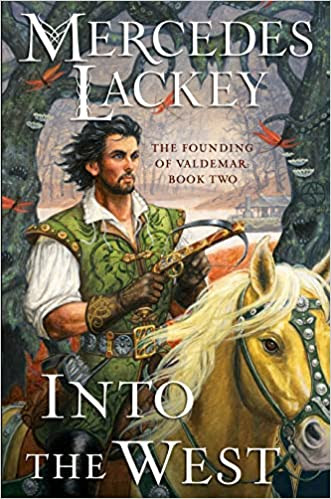
Into the West: Mercedes Lackey 

Rating: ðŸ“šðŸ“šðŸ“š

Release Date: December 13, 2022

Fantasy

Baron Valdemar and his people have found a temporary haven, but it cannot hold all of them, or for long. Trouble could follow on their heels at any moment, and there are too many people for Crescent Lake to support. Those who are willing to make a further trek by barge on into the West will follow him into a wilderness depopulated by war and scarred by the terrible magics of a thousand years ago and the Mage Wars. But the wilderness is not as empty as it seems. There are potential friends and rapacious foes....

....and someone is watching them.


 Tudors in Love: Passion and Politics in the Age of England's Most Famous Dynasty- Sarah Gristwood

Rating: ðŸ“šðŸ“šðŸ“šðŸ“š

Release Date: December 13, 2022

Nonfiction/Medieval History

In this ground-breaking history, Sarah Gristwood reveals the way courtly love made and marred the Tudor dynasty. From Henry VIII declaring himself as the ‘loyal and most assured servant' of Anne Boleyn to the poems lavished on Elizabeth I by her suitors, the Tudors re-enacted the roles of the devoted lovers and capricious mistresses first laid out in the romances of medieval literature. The Tudors in Love dissects the codes of love, desire and power, unveiling romantic obsessions that have shaped the history of the world